
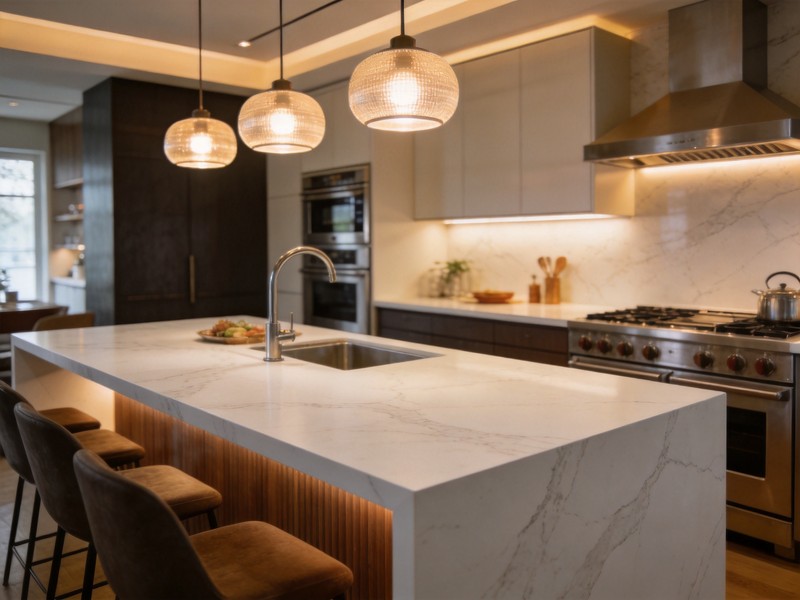
Outdoor kitchen design has evolved dramatically, with homeowners demanding materials that match indoor aesthetics while withstanding nature's full force. Sintered stone outdoor kitchen countertops have emerged as the premium choice, combining stunning visual appeal with uncompromising durability. This comprehensive guide explores why sintered stone outperforms every alternative in outdoor environments.
Why Outdoor Kitchens Demand Superior Materials
Outdoor countertops face challenges indoor surfaces never encounter. UV radiation, temperature extremes, moisture, freeze-thaw cycles, and environmental pollutants all threaten surface integrity. Materials that perform beautifully inside often fail rapidly outdoors—fading, cracking, staining, or deteriorating within just a few seasons.
Traditional materials present significant limitations:
- Natural stone: Granite and marble require annual sealing and can etch from acidic foods and rain
- Concrete: Prone to cracking, staining, and efflorescence without intensive maintenance
- Quartz: UV exposure causes discoloration, and thermal expansion leads to delamination
- Tile: Grout lines trap moisture, stain, and require constant upkeep
- Stainless steel: Shows scratches, water spots, and feels cold in aesthetic
Sintered stone eliminates these limitations through its unique manufacturing process, creating a material engineered specifically for demanding environments.
The Science Behind Sintered Stone's Outdoor Performance
Sintered stone undergoes a transformative manufacturing process that fundamentally changes its molecular structure. Natural minerals—including feldspar, quartz, silica, and inorganic pigments—are compressed under extreme pressure exceeding 15,000 tons and then fired at temperatures above 1,200°C. This sintering process completely vitrifies the material, eliminating porosity and creating a crystalline structure of exceptional strength.
Zero Water Absorption
With water absorption below 0.1%, sintered stone ranks among the most impervious materials available. Unlike porous materials that absorb moisture leading to staining, freeze damage, and biological growth, sintered stone repels water entirely. Rain, splashed drinks, and cleaning water bead on the surface rather than penetrating. This characteristic proves essential for outdoor applications where moisture exposure is constant.
UV Radiation Stability
Unlike quartz surfaces containing UV-sensitive resin binders, sintered stone contains no organic compounds. The inorganic pigments used for coloration are stable under prolonged UV exposure, maintaining original colors without fading or yellowing. Accelerated aging tests confirm color stability exceeding 25 years of direct sun exposure—a critical advantage for south-facing and uncovered outdoor installations.
Thermal Shock Resistance
Outdoor surfaces experience dramatic temperature swings: direct summer sun can heat surfaces to 80°C, while winter nights may plunge to -20°C. Materials with significant thermal expansion coefficients suffer stress fractures under these conditions. Sintered stone's extremely low thermal expansion coefficient (approximately 5-6 x 10⁻⁶/°C) means virtually no dimensional change across this temperature range. The material resists thermal shock without cracking, delaminating, or losing surface integrity.
Heat Performance: Perfect for Cooking Areas
Outdoor kitchens revolve around cooking, and countertop heat resistance determines material suitability near grills and cooking stations.
Direct Flame and Hot Cookware Tolerance
Sintered stone handles direct flame contact without damage—placing hot pans, skillets, or grill tools directly on the surface causes no scorching, blistering, or discoloration. The material's melting point exceeds 1,300°C, far beyond any temperature encountered in outdoor cooking. This performance eliminates the need for trivets or protective pads, streamlining cooking workflows.
Compare this to other materials:
- Laminate surfaces melt or burn at 80-120°C
- Quartz surfaces discolor and may delaminate above 150°C
- Wood and composite materials scorch and char
- Even some natural stones can discolor with prolonged heat exposure
Grill Surround Applications
Sintered stone excels as full grill surrounds, creating cohesive outdoor kitchen designs with continuous material from cooking surface to prep areas. Large format slabs (up to 1600x3200mm) minimize joints where grease and moisture could accumulate. The material's chemical resistance also handles grill cleaning products without surface damage.
Design Possibilities for Outdoor Spaces
Aesthetic Coordination
Modern outdoor kitchens deserve aesthetic continuity with indoor living spaces. Sintered stone enables seamless design transitions—use identical slab colors for kitchen counters, outdoor dining tables, and indoor island surfaces. This coordination creates visual harmony impossible with materials limited to specific applications.
Popular Outdoor Design Aesthetics
Current outdoor kitchen trends favor several sintered stone approaches:
- Natural stone replication: Marble-look sintered stone in Calacatta or Statuario patterns brings luxury aesthetics outdoors
- Concrete contemporary: Matte grey tones in textured finishes create modern industrial outdoor spaces
- Terrazzo revival: Speckled patterns with embedded chips add playful character to casual outdoor entertaining areas
- Solid sophistication: Solid color slabs in white, black, or charcoal provide clean backdrops for outdoor dining
Large Format Advantages
Outdoor surfaces often span substantial distances. Sintered stone's large format capability (available up to 1600x3200mm) minimizes seams and joints that interrupt visual flow and collect debris. Fewer joints also mean faster cleaning and improved hygiene—critical for food preparation areas.
Installation Considerations
Structural Support Requirements
Sintered stone in 12mm or 15mm thickness requires adequate structural support from the cabinet or frame below. Standard outdoor kitchen frames using marine-grade plywood or steel provide sufficient support. For cantilevered sections exceeding 200mm, thicker material (20mm) or steel reinforcement is recommended. MENGNA SURFACES provides detailed installation guidelines for outdoor applications.
Edge Treatment Options
Outdoor sintered stone countertops benefit from specific edge profiles:
- Straight edge: Clean, modern appearance; easiest to maintain
- Beveled edge: Adds visual interest while protecting corners
- Bullnose: Classic rounded profile; requires 20mm thickness minimum
- Eased edge: Slightly rounded corner for safety and aesthetics
Expansion Joint Considerations
Outdoor installations spanning more than 4 meters should incorporate expansion joints to accommodate thermal movement. Silicone-based flexible joints accommodate seasonal expansion without stress. Consult with your fabricator for specific recommendations based on your climate zone and installation dimensions.
Maintenance Guide for Outdoor Surfaces
Despite its durability, sintered stone benefits from regular maintenance to maintain optimal appearance:
Daily Cleaning
Wipe surfaces with warm water and mild soap using a soft cloth or sponge. For cooking areas, clean grease promptly to prevent buildup. The non-porous surface means most spills wipe away without staining—even grease, oil, wine, and coffee.
Weekly Maintenance
Hose down or pressure wash countertops to remove accumulated dirt, pollen, and environmental debris. For textured finishes, use a soft brush to clean recesses. Check and clean any expansion joints or silicone seals.
Seasonal Deep Cleaning
At season start and end, perform thorough cleaning:
- Remove all items and debris
- Clean with pH-neutral stone cleaner
- Inspect for any damage or wear
- Check structural supports and fasteners
- Reapply silicone sealants if needed
What to Avoid
- Abrasive scrubbers that may dull polished finishes
- Harsh chemicals: avoid bleach, ammonia, and acidic cleaners
- Metal tools that might scratch the surface
- Standing water in freeze-prone conditions (though sintered stone handles this well)
Comparing Outdoor Countertop Materials
| Property | Sintered Stone | Granite | Quartz | Concrete |
|---|---|---|---|---|
| Water Absorption | <0.1% | 0.1-0.4% | 0.02-0.05% | 5-10% |
| UV Stability | Excellent | Good | Poor | Good |
| Heat Resistance | 300°C+ | 200°C | 150°C | 200°C |
| Maintenance | Minimal | Annual sealing | Low | Regular sealing |
| Fade Resistance | None | Minimal | Moderate | Minimal |
| Frost Resistance | Excellent | Good | Poor | Fair |
Cost Considerations
Outdoor sintered stone countertops typically cost $30-80 per square foot installed, depending on:
- Slab selection: Standard colors start lower; exotic patterns command premium pricing
- Thickness: 12mm is most economical; 20mm adds 30-40% cost
- Complexity: Simple rectangular layouts cost less than curved or angled designs
- Edge treatment: Basic edges are included; premium profiles add fabrication cost
- Location: Remote delivery areas may incur transportation premiums
While initial costs may exceed some alternatives, sintered stone's 50+ year lifespan with minimal maintenance delivers superior lifetime value. Consider the cost of repeated sealing, repairs, or complete replacement with less durable materials.
Climate-Specific Recommendations
Hot, Sunny Climates (Arizona, Florida, Southern Europe)
Prioritize UV-stable light colors that minimize heat absorption. Light-colored sintered stone stays cooler to touch while maintaining color stability. Consider subtle textures that provide slip resistance for wet areas near pools.
Cold, Freeze-Thaw Climates (Northern US, Canada, Scandinavia)
Ensure proper installation with adequate drainage to prevent water pooling. Sintered stone's frost resistance handles temperature extremes, but standing water in freeze conditions should be avoided. Choose darker tones that complement winter landscapes.
Humid, Coastal Climates (Gulf Coast, Southeast Asia, Mediterranean)
Sintered stone's complete moisture resistance proves invaluable in humid environments. The material resists the salt spray, mold, and mildew that challenge other surfaces. Marine-grade stainless steel hardware complements stone surfaces in coastal locations.
Start Your Outdoor Kitchen Project
Transform your outdoor entertaining space with premium sintered stone countertops. Our technical team provides consultation on material selection, design coordination, and installation requirements for your climate zone.
Request Consultation