
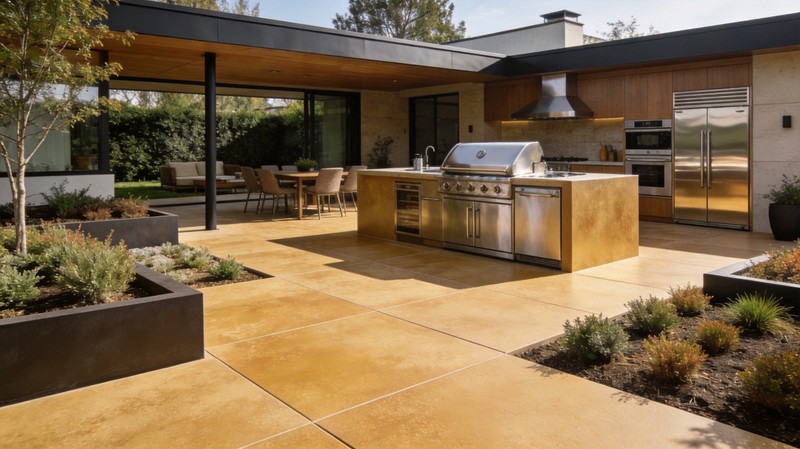
The outdoor kitchen has evolved from a simple grill station to a sophisticated extension of indoor living. As homeowners invest more in outdoor entertaining spaces, the demand for materials that can withstand the elements while delivering luxury aesthetics has never been higher. Sintered stone has emerged as the definitive choice for outdoor kitchen and BBQ area surfaces, offering performance characteristics that no other material can match.
Why Sintered Stone Dominates Outdoor Applications
Outdoor kitchen surfaces face challenges that indoor materials simply cannot handle. UV radiation, temperature extremes, moisture from rain and humidity, grease and food spills, and the intense heat from cooking equipment all conspire to degrade lesser materials. Sintered stone was engineered specifically to excel under these demanding conditions.
The manufacturing process—combining natural minerals under pressures exceeding 400 bars and temperatures above 1,200°C—creates a material with properties perfectly suited for outdoor use. The result is an ultra-compact surface with near-zero porosity, exceptional hardness (Mohs 9+), and complete resistance to the environmental factors that destroy other materials.
Key Performance Advantages
Complete UV Resistance
Unlike quartz, which contains UV-sensitive resins that yellow and degrade in sunlight, sintered stone is completely immune to UV damage. The color and pattern are intrinsic to the material, distributed through its entire thickness rather than applied as a surface coating. This means your outdoor kitchen will maintain its original beauty indefinitely, whether you choose a pristine white surface or a dramatic marble-look design.
Exceptional Heat Resistance
For BBQ areas, heat resistance is paramount. Sintered stone can withstand direct contact with extremely hot cookware without suffering burns, marks, or discoloration. Unlike laminate or even some natural stones, you can place a searing hot grill pan or pizza stone directly on sintered stone without worry. The material's thermal stability also protects against the radiant heat from nearby BBQs and fire features.
Freeze-Thaw Durability
With water absorption below 0.1%, sintered stone is impervious to freeze-thaw damage. In climates where temperatures fluctuate below freezing, water can penetrate porous materials, freeze, expand, and cause cracking. Sintered stone's dense, non-porous structure prevents this damage entirely, ensuring years of trouble-free service regardless of winter conditions.
Stain and Chemical Resistance
Outdoor kitchens see their fair share of grease splatter, wine spills, and BBQ sauce mishaps. Sintered stone's non-porous surface repels these common kitchen hazards. The material is also resistant to common household cleaners and pool chemicals, making it ideal for poolside applications where chlorine exposure is a concern.
Designing Your Outdoor Kitchen
Successful outdoor kitchen design balances aesthetics with practical considerations. Sintered stone offers the design flexibility to create stunning spaces while meeting the functional requirements of outdoor cooking.
Countertop Configurations
Modern outdoor kitchens typically incorporate multiple countertop zones:
- Prep Station: A dedicated area for food preparation with generous counter space
- Cooking Zone: Counter space adjacent to the grill or cooktop
- Serving Area: For plating and presenting food to guests
- Bar/Seating Counter: Casual dining surface for outdoor entertaining
Material Pairing
Sintered stone coordinates beautifully with other outdoor materials:
- Stainless Steel: Creates a professional chef's kitchen aesthetic
- Teak or Ipe Wood: Warm natural contrast to stone surfaces
- Powder-Coated Aluminum: Modern frame materials in coordinating colors
- Natural Stone: Combines with basalt or limestone for organic textures
Color and Pattern Selection
For outdoor applications, consider how colors will appear in natural light throughout the day:
| Finish Type | Recommended For | Considerations |
|---|---|---|
| Light Marble-Look | Modern, bright outdoor spaces | Shows less heat absorption; stays cooler |
| Dark Solid Colors | Contemporary, dramatic designs | Absorbs more heat; use near shade |
| Concrete/Industrial | Modern, urban outdoor kitchens | Hides minor wear; forgiving maintenance |
| Wood-Grain | Organic, nature-integrated spaces | Unique aesthetic; UV stable |
Cabinet and Structure Design
Supporting sintered stone surfaces in outdoor kitchens requires proper structural planning.
Base Cabinet Materials
Outdoor cabinet bases must withstand the same environmental challenges as the countertops:
- Marine-Grade Plywood: Exterior-grade plywood with waterproof adhesives
- Powder-Coated Steel: Maximum durability with color options
- Stainless Steel: Professional aesthetic with superior longevity
- Polymers/HDPE: Weatherproof, low-maintenance alternative
Waterproofing Essentials
Even with sintered stone's waterproof surface, the supporting structure requires proper waterproofing:
- Seal all cabinet joints with marine-grade silicone
- Install drip edges above cabinet tops
- Use waterproof membrane under stone countertops
- Ensure adequate slope for water runoff
Installation Best Practices
Proper installation ensures your outdoor sintered stone surfaces perform optimally for decades.
Substrate Preparation
Outdoor installations require solid, stable substrates:
- Concrete slabs provide the most stable base
- Steel frame structures must be properly anchored
- Allow concrete to cure fully (minimum 28 days) before installation
- Ensure proper drainage beneath the structure
Adhesive and Jointing
Outdoor conditions demand specialized materials:
- Use flexible, frost-proof adhesives designed for exterior use
- Flexible grout accommodates thermal expansion
- Minimum 3mm joints for adequate movement accommodation
- Silicone expansion joints at fixed perimeter connections
Overhead Protection
While sintered stone handles direct exposure, overhead protection extends its already excellent longevity:
- Pergola or covered structure reduces cleaning frequency
- Extends usable hours during hot summers
- Protects appliances and accessories
- Allows year-round use in more climates
Maintenance Guide
One of sintered stone's greatest advantages is minimal maintenance requirements.
Daily Care
- Wipe surfaces with warm water and mild soap
- Clean spills promptly, especially acidic substances
- Use soft cloth or non-abrasive sponge
Periodic Maintenance
- Deeper clean with specialized stone cleaner
- Inspect joints and reseal if necessary
- Check supporting structure for any movement
What to Avoid
- Abrasive cleaners or scrub brushes
- Harsh chemicals (hydrofluoric acid, strong alkalis)
- Sharp objects that could scratch surface
- Standing water on joints (though harmless to stone)
Cost Considerations
Outdoor sintered stone represents a premium investment, but one that pays dividends over time:
Initial Investment Factors
- Material cost varies by thickness and design complexity
- Complex edge profiles add fabrication costs
- Outdoor-rated adhesive and grout are more expensive
- Professional installation recommended for structural elements
Long-Term Value
- No sealing or special treatments ever required
- Eliminates replacement costs from weather damage
- Maintains appearance without restoration
- Adds property value to outdoor living spaces
Application Beyond Countertops
Sintered stone extends throughout the entire outdoor kitchen:
Outdoor Fire Features
Fire pits and outdoor fireplaces with sintered stone surrounds create dramatic focal points. The material's A1 fire rating and heat resistance make it ideal for these applications, including surrounds, mantels, and hearth extensions.
Outdoor Bar Surfaces
Full outdoor bars with sintered stone tops and fronts create sophisticated entertaining spaces. The material's resistance to stains and easy cleaning are particularly valuable for bar applications.
Poolside Applications
Sintered stone's slip resistance (R11 rated options available) and chlorine resistance make it excellent for poolside bars, benches, and decorative elements.
Conclusion
Sintered stone has fundamentally changed what's possible in outdoor kitchen design. By eliminating the performance limitations of traditional materials, it enables outdoor spaces that maintain their beauty and functionality year after year, regardless of climate or conditions.
For homeowners and designers seeking the ultimate in outdoor living surfaces, sintered stone delivers unmatched performance, timeless aesthetics, and genuine value. Your outdoor kitchen deserves surfaces that can handle everything nature—and your cooking—throws at them.