Sintered Stone Kitchen Island: Complete Design Guide for Modern Kitchens
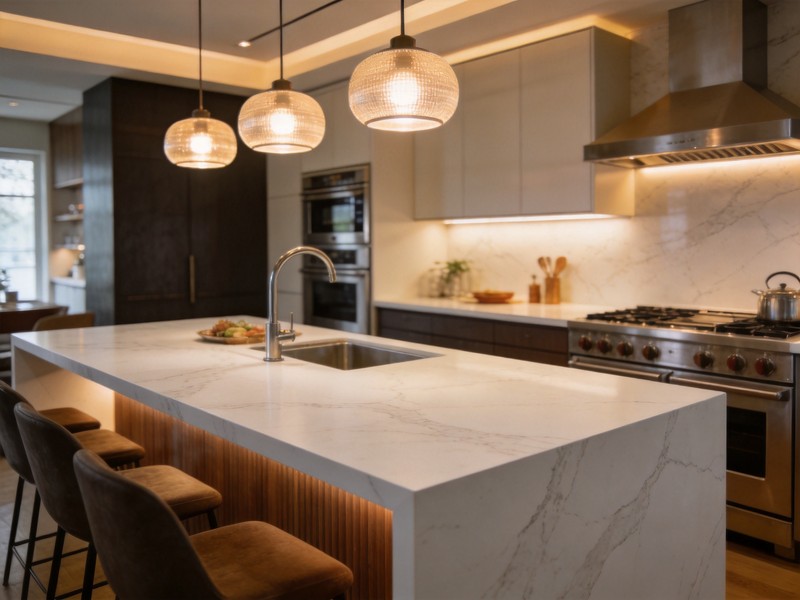
The kitchen island has evolved from a simple functional addition to the centerpiece of modern culinary spaces. As homeowners and designers seek materials that combine aesthetic beauty with uncompromising durability, sintered stone has emerged as the premier choice for kitchen island applications.
Why Sintered Stone Dominates Kitchen Island Design
The kitchen island serves multiple purposes in contemporary homes: meal preparation surface, casual dining area, homework station, and social hub during gatherings. This multifaceted role demands a material that can withstand daily abuse while maintaining its elegant appearance.
Sintered stone addresses these challenges through its unique manufacturing process. Created under extreme pressure exceeding 400 bars and temperatures above 1,200°C, sintered stone achieves a density and structural integrity that exceeds natural stone. The result is a non-porous surface with exceptional resistance to scratches, stains, heat, and UV exposure.
Superior Performance Characteristics
Unlike quartz, which contains resin binders that can discolor under UV light or damaged by heat above 200°C, sintered stone maintains its integrity regardless of environmental conditions. This makes it ideal for islands positioned near windows where direct sunlight would threaten lesser materials.
The material's thermal shock resistance also proves valuable in active kitchens. Placing hot pans directly from the stovetop onto the island surface—a common practice during entertaining—causes no damage to sintered stone. This direct-heat capability eliminates the need for trivets, maintaining clean sightlines across the workspace.
Kitchen Island Dimensions and Proportions
Successful kitchen island design begins with proper sizing. The island must accommodate its intended functions while maintaining comfortable traffic flow around its perimeter.
Minimum Size Requirements
A functional kitchen island requires a minimum of 1,200mm (4 feet) in length and 600mm (24 inches) in depth to serve as a food preparation surface. However, islands intended for dining or entertaining should measure at least 1,800mm (6 feet) long and 900mm (36 inches) deep to provide adequate seating clearance.
For larger open-plan kitchens exceeding 40 square meters, islands measuring 2,400-3,000mm (8-10 feet) create impressive visual anchors while providing generous workspace. These larger islands often incorporate multiple functional zones: preparation area, cooktop integration, and seating sections.
Height Considerations
Standard kitchen island height matches conventional countertops at 900mm (36 inches). However, contemporary designs increasingly incorporate variable heights: standard height for food preparation, raised bar height (1,100mm/44 inches) for casual seating, and lower counter height (750mm/30 inches) for children or formal dining integration.
Sintered stone's fabrication flexibility allows these height variations to be achieved through careful design, whether as a single monolithic form or as complementary surface levels within the island composition.
Thickness Selection for Kitchen Islands
Thickness choice significantly impacts both the aesthetic and practical performance of sintered stone kitchen islands.
12mm Thickness: The Modern Standard
At 12mm (approximately 1/2 inch), sintered stone achieves the ideal balance between visual elegance and structural soundness for most island applications. This thickness supports spans up to 900mm without requiring additional substrate reinforcement when properly supported underneath.
The 12mm profile creates contemporary, knife-edge silhouettes that appeal to minimalist design sensibilities. When routed with subtle bevels or rounded edges, this thickness achieves refined details without material waste.
20mm Thickness: Architectural Presence
For dramatic visual impact or applications requiring enhanced durability, 20mm slabs command attention. This thickness suits large commercial kitchen islands, bar-height surfaces, and installations where the island's mass should contribute to the overall design weight.
The thicker material also benefits waterfall edge installations where the slab face extends down cabinet sides. The 20mm edge provides substantial visual presence and can be processed into sharp, architectural details.
Double-Layer and Laminated constructions
Premium installations sometimes employ double-layer construction: two 12mm slabs bonded together with adhesive and integrated dowels. This creates apparent thickness of 24mm while maintaining the aesthetic benefits of thin-profile edges. The construction also provides additional strength for cantilevered sections or extended overhangs.
Design Styles and Aesthetic Approaches
The Waterfall Island
Perhaps the most iconic contemporary kitchen island design, the waterfall feature extends the countertop material vertically down the cabinet sides, creating an uninterrupted material flow. Sintered stone's consistent through-body color and pattern make it ideal for this application, as edge surfaces match the top plane seamlessly.
The technique works particularly well with solid-color or subtle marble-look sintered stone varieties, where the visual continuity emphasizes material purity. Bold veined patterns may appear overly busy when extended vertically, though some designers embrace this dynamic quality.
Integrated Cooktop Islands
Kitchen islands increasingly incorporate cooking functionality, requiring careful coordination between the sintered stone surface and cooktop infrastructure. Induction cooktops integrate flush with the stone surface, creating seamless cooking zones that maintain the island's clean lines.
Sintered stone's heat resistance proves advantageous here, as the surface surrounding the cooktop remains unaffected by sustained thermal loads. The material can also be fabricated with integrated drain grooves for islands incorporating prep sinks.
Floating and Cantilevered Designs
Advanced fabrication techniques enable sintered stone islands with cantilevered sections extending beyond the cabinet base. These dramatic designs require structural engineering consultation but create stunning visual effects where the heavy stone appears to defy gravity.
Typical cantilever extensions reach 300-450mm for 12mm slabs, supported by concealed steel framing within the cabinet structure. The technique works best with darker colors that visually recede, minimizing the perceived mass of extended surfaces.
Color and Pattern Selection
Sintered stone manufacturers offer extensive collections spanning solid colors, concrete-inspired textures, and marble reproductions. Kitchen island selection should coordinate with overall kitchen design while considering practical maintenance factors.
Light Colors: Brightness and Space
White and cream-toned sintered stone islands maximize light reflection, making smaller kitchens appear more spacious. These colors also provide neutral backdrops that accommodate evolving decor preferences over time.
However, light surfaces show daily use marks more visibly. Water spots, fingerprints on polished surfaces, and temporary staining from spills require more frequent maintenance. Matte or textured finishes partially mitigate this concern while maintaining light color schemes.
Dark Colors: Drama and Practicality
Charcoal, black, and deep gray sintered stone creates dramatic kitchen islands with strong visual presence. These colors hide daily wear remarkably well, maintaining clean appearance with minimal effort. Dark surfaces also complement wood cabinetry and brass or black hardware fixtures.
The major consideration with dark surfaces is visibility of dust, crumbs, and light-colored spills. However, these are typically addressed during regular cleaning routines and become less noticeable than on light materials.
Marble-Look Patterns: Luxury Appeal
High-definition printing technology enables sintered stone to reproduce natural marble veining with remarkable accuracy. These collections offer the aesthetic prestige of marble without maintenance concerns: no sealing required, no etching from acidic substances, no vulnerability to scratching.
For kitchen islands where the material serves primarily aesthetic purposes—low-use formal kitchens, design-focused showpieces—marble-look sintered stone provides an attractive solution. In high-use family kitchens, solid colors or concrete-inspired textures offer better practical performance.
Integration with Cabinetry and Accessories
Base Cabinet Design
The cabinet supporting the sintered stone island must accommodate both the weight of the material and the functional requirements of kitchen storage. Standard base cabinets typically reach 870mm in height to align with 900mm countertop surfaces, leaving clearance for cabinet door operation.
Reinforced cabinet construction using 18mm or thicker cabinet-grade plywood provides adequate support for most residential island configurations. Steel frame inserts beneath the countertop distribute loads across multiple cabinet modules, preventing localized stress concentrations.
Hardware Integration
Kitchen islands accommodate various hardware elements requiring careful coordination with the stone surface. Pop-up electrical outlets, integrated USB charging ports, and flush-mount cooktop installations all demand precise fabrication and coordination with supporting trades.
For island sections intended for seating, consideration should be given to knee clearance when determining overhang distances. Standard guidelines recommend 600mm clearance from cabinet face to stool back, allowing comfortable seating without awkward positioning.
Maintenance and Care
One of sintered stone's primary advantages over natural stone is minimal maintenance requirements. The non-porous surface never requires sealing, and daily cleaning involves only warm water and mild detergent.
Stubborn stains respond to non-abrasive cleaning products specifically formulated for stone surfaces. Harsh chemicals, bleach, and abrasive pads should be avoided to preserve surface finishes. For matte or textured surfaces, occasional deep cleaning with specialized stone cleaners maintains original appearance.
While sintered stone resists scratching from normal kitchen activities, using cutting boards protects both the knife edges and any sensitive surface finishes. Dragging heavy cookware across the surface should be avoided, as the material, though highly scratch-resistant, is not entirely scratch-proof.
Cost Considerations
Sintered stone kitchen islands represent a premium investment in kitchen design. Material costs typically range from $80-200 per square foot depending on collection, thickness, and fabrication complexity. Professional installation, including templating, fabrication, and installation, adds $40-80 per square foot to project costs.
Despite higher initial costs compared to granite or quartz, sintered stone offers superior long-term value. The material's 25+ year expected service life, combined with zero maintenance costs, results in lower total cost of ownership over the product lifecycle.
Conclusion
The kitchen island represents a significant design decision with lasting impact on daily living. Sintered stone provides the ideal combination of aesthetic versatility, mechanical performance, and practical durability for this demanding application. Whether pursuing minimalist contemporary design or luxurious traditional aesthetics, sintered stone kitchen islands deliver lasting beauty and functionality that justifies their premium positioning in the market.
For architects, designers, and homeowners planning kitchen renovation or new construction, sintered stone islands merit serious consideration. The material's unique properties enable design possibilities unavailable with conventional surfacing materials, while its maintenance-free nature ensures continued beauty for decades of family gatherings, meal preparations, and everyday moments that define home life.
Ready to Design Your Sintered Stone Kitchen Island?
Contact MENGNA SURFACES for technical specifications, sample availability, and project consultation services for your next kitchen island project.
Request a QuoteFrequently Asked Questions
What thickness of sintered stone is best for a kitchen island?
For kitchen islands, we recommend 12mm (approximately 1/2 inch) or 15mm (approximately 5/8 inch) sintered stone for the countertop surface. These thicknesses provide excellent durability while allowing for modern, sleek profiles. For waterfall edge installations, 20mm slabs offer superior edge quality and structural integrity.
Can sintered stone be used for both the countertop and cabinet doors on a kitchen island?
Yes, many manufacturers offer matching sintered stone slabs in thin formats (3mm, 6mm) specifically designed for cabinet door applications. This creates a cohesive, monolithic aesthetic where the countertop material extends down the cabinet sides, known as a waterfall edge design.
How do you support a large sintered stone kitchen island?
Kitchen islands require proper structural support regardless of countertop material. For sintered stone islands, we recommend a plywood substrate or steel frame support system. The cabinet base should be designed to handle the weight (approximately 15-25 kg per square meter for 12mm slabs) and provide even support across the entire footprint.
What are the advantages of sintered stone over quartz for kitchen islands?
Sintered stone offers several advantages over quartz for kitchen islands: superior heat resistance (can withstand direct contact with hot cookware), better UV stability for near-windows installations, no resin content meaning no potential for yellowing over time, and higher mechanical strength. Sintered stone is also more resistant to scratching and chemical etching.
How much does a sintered stone kitchen island cost compared to granite?
Sintered stone kitchen islands typically range from $80-200 per square foot installed, while granite ranges from $40-100 per square foot. However, sintered stone offers lower lifetime maintenance costs as it never requires sealing, resists staining more effectively, and maintains its appearance without professional polishing.
🌍 Explore by Country
Dive deeper into sintered stone solutions tailored for your market.