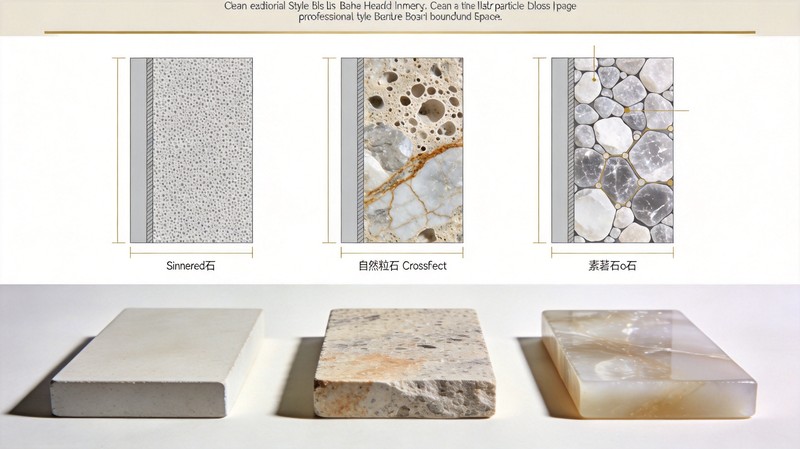
Why Sintered Stone Is the Premier Backsplash Material
Sintered stone backsplash installations represent the intersection of exceptional performance and refined aesthetics in modern kitchen design. As architects and designers seek materials that balance visual impact with practical durability, sintered stone emerges as the definitive choice for this critical kitchen zone.
The backsplash serves as both a functional barrier against cooking splashes and a significant visual element that can unify or transform a kitchen's aesthetic. Unlike countertop selection, where performance often dominates decision-making, backsplash material choice requires equal consideration of design impact and practical longevity. Sintered stone delivers on both fronts.
Understanding Sintered Stone Backsplash Specifications
Optimal Thickness for Backsplash Applications
Sintered stone backsplash installations typically use 6mm thickness, providing an ideal balance of durability and cost efficiency. This thickness offers several advantages:
- Material efficiency: 6mm panels cost significantly less than thicker formats while maintaining excellent performance characteristics
- Minimal wall loading: Reduced weight places less stress on wall structures and simplifies installation
- Design flexibility: Thinner material allows easier handling around outlets, corners, and architectural features
- Transition matching: Can be coordinated with thinner countertop edge treatments for cohesive design
For projects requiring matching with thicker countertops (12mm or 20mm), the visual transition can be achieved through mitered edge details or subtle shadow gap reveals that create intentional design breaks rather than awkward thickness differences.
Large Format Advantages
Sintered stone slabs available in dimensions up to 1,600×3,200mm offer transformative benefits for backsplash installations. A full-height backsplash can often be covered with a single piece, eliminating visible seams entirely. This monolithic approach delivers:
- Seamless aesthetics: No grout lines to collect grease, discoloration, or mildew
- Enhanced hygiene: Continuous surface prevents bacterial harborage in joints
- Design impact: Large-scale veining patterns create dramatic visual statements impossible with smaller tiles
- Maintenance simplicity: One continuous surface wipes clean without worrying about grout deterioration
Design Styles and Aesthetic Options
Marble-Effect Backsplashes
Marble-effect sintered stone represents one of the most popular backsplash choices, offering the luxury appearance of natural stone with superior practical performance. Advanced digital printing technology achieves remarkable authenticity in veining patterns, from subtle gray wisps on white backgrounds to dramatic golden veins cutting through deep charcoal surfaces.
The advantage over natural marble becomes immediately apparent in the kitchen environment: wine, coffee, tomato sauce, and cooking oils that would permanently stain natural marble wipe away effortlessly from sintered stone. The material's non-porous nature means no sealing is ever required, and the surface maintains its original beauty indefinitely.
Concrete and Industrial Aesthetics
Industrial design schemes benefit from sintered stone's ability to authentically replicate concrete textures and finishes. From smooth polished concrete to rough-sawn industrial surfaces, the material range supports contemporary architectural visions without the porosity, staining concerns, or maintenance requirements of actual poured concrete.
Concrete-effect backsplashes work particularly well in open-plan kitchens where the material continues from backsplash to countertop or extends across adjacent wall surfaces, creating cohesive spatial design rather than isolated material changes.
Minimalist Monochrome Approaches
Contemporary minimalist kitchens often feature monochrome backsplash designs where the material color subtly complements or contrasts with cabinetry and countertops. Sintered stone's consistent color-through-body composition means any edge cuts or chip repairs remain virtually invisible—a critical advantage over surface-printed materials.
Textured Surface Options
Beyond polished finishes, sintered stone backsplashes are available in honed, matte, and textured finishes that add tactile dimension to vertical surfaces. These finishes can:
- Reduce visibility of water spots and fingerprints on dark surfaces
- Add visual depth and architectural interest to otherwise flat surfaces
- Create light-refraction effects that animate the surface throughout the day
- Support accessibility requirements for grip-able surfaces in multi-generational homes
Heat and Stain Resistance: Critical Kitchen Performance
Thermal Performance in Cooking Zones
The backsplash zone faces thermal challenges that vary dramatically based on cooking methods and appliance placement. Gas cooktops generate significant radiant heat on nearby surfaces, while electric and induction cooktops present lower but still meaningful thermal loads. Sintered stone's heat resistance exceeding 900°C provides substantial safety margins above any residential cooking scenario.
Unlike materials that can suffer surface damage from hot cookware or proximity to flames, sintered stone maintains its appearance indefinitely under normal kitchen thermal conditions. This reliability allows designers to specify sintered stone immediately behind high-heat cooking zones without concern for thermal damage.
Chemical and Stain Resistance
Kitchen backsplashes face exposure to the full range of cooking-related substances: oils, acids, pigments, and cleaning agents. Sintered stone's chemical resistance protects against:
- Acidic foods: Lemon juice, vinegar, wine, and tomato-based products
- Oils and fats: Cooking oils, butter, and greasy splatter
- Pigmented substances: Turmeric, beet juice, food coloring, and wine
- Cleaning agents: Common kitchen cleaners without risk of surface dulling
The practical benefit is immediate: daily cooking splatter can be wiped away during normal kitchen cleanup without special treatment, and even neglected spills release easily without staining or surface damage.
Installation Methods and Best Practices
Direct Wall Installation
Thin-format sintered stone (6mm) can be directly adhered to properly prepared wall substrates using appropriate tile adhesives. The substrate must be:
- Flat: Within 3mm over 2 meters to prevent lippage and stress concentrations
- Dry: Moisture content within manufacturer specifications to ensure proper bond development
- Clean: Free from dust, grease, sealers, or any substance that might impair adhesion
- Structurally sound: No movement or flexing that could stress the adhered stone
Modified thin-set mortars with enhanced bond strength are recommended for sintered stone backsplash installation. The adhesive should be applied using both the back-buttering method on the stone and a combed layer on the substrate to ensure complete coverage and void-free bond.
Mechanical Fastening Systems
For installations where adhesive bonding is not suitable—or where additional security is desired—mechanical fastening systems offer reliable alternatives. These include:
- Stainless steel clips: Concealed clips that hold panels in place while allowing thermal movement
- Rail systems: Continuous horizontal rails that support panel weight and provide adjustment capability
- Structural adhesive with mechanical backup: Combined systems where mechanical fasteners provide primary support and adhesive provides secondary retention and sealing
Seam Treatment and Waterproofing
Where backsplash seams are unavoidable, proper treatment ensures long-term performance and aesthetics:
- Silicone sealant: Flexible, color-matched silicone designed for stone applications accommodates thermal movement while preventing moisture penetration
- Color-matched epoxy: For more permanent seam appearance where some flexibility is acceptable
- Shadow gaps: Intentional reveals that create design elements while masking seam locations
- Expansion joint planning: Adequate joints at wall-to-countertop and wall-to-wall transitions
Electrical Outlet Integration
Modern kitchens require careful coordination between backsplash material and electrical outlet placement. Sintered stone's workability allows:
- Flush-mount outlets: Electrical boxes can be recessed into the stone for perfectly flush outlet installations
- Pop-up outlets: Integration with countertop pop-up units where backsplash meets counter
- USB and specialty outlets: Accommodates modern charging and connectivity requirements
Maintenance and Long-Term Care
Sintered stone backsplashes require minimal maintenance compared to alternative materials. Daily care involves simply wiping the surface with a damp cloth or mild cleaning solution. The non-porous surface prevents:
- Grout staining and discoloration
- Mold and mildew growth in seams
- Permanent marking from pigmented substances
- Surface dulling from repeated cleaning
Unlike natural stone backsplashes that require periodic resealing, or glass backsplashes that show every fingerprint and water spot, sintered stone maintains its appearance through years of kitchen use with minimal intervention.
Cost Considerations and Value Analysis
While sintered stone backsplashes represent a higher initial investment than ceramic tile or paint, the total cost of ownership analysis favors the premium material:
- Eliminated sealing costs: No ongoing sealing treatment expenses over the material's lifetime
- Extended replacement cycles: Material maintains appearance far longer than alternatives
- Reduced cleaning product costs: Simple cleaning suffices; no specialty stone cleaners required
- Enhanced property value: Premium materials contribute to overall property valuation
Comparing Backsplash Materials
When evaluating backsplash options, sintered stone demonstrates advantages across critical performance categories:
| Material | Heat Resistance | Stain Resistance | Maintenance | Seam Visibility | Longevity |
|---|---|---|---|---|---|
| Sintered Stone | Excellent (900°C+) | Excellent | Minimal | Minimal (large format) | Lifetime |
| Natural Stone | Good | Requires Sealing | Moderate | Moderate | Good (with maintenance) |
| Ceramic Tile | Good | Good | Moderate (grout care) | High (grout lines) | Good |
| Glass | Good | Excellent | High (fingerprints) | Low | Good |
| Stainless Steel | Excellent | Good | High (streaks) | Seamless | Excellent |
Design Inspiration: Contemporary Approaches
Full-Height Continuous Installation
Modern kitchen designs increasingly extend sintered stone from countertop to ceiling, creating dramatic floor-to-ceiling surfaces that eliminate upper cabinet visual weight and create gallery-like spaces. This approach works particularly well with:
- Light-colored stone with subtle veining for bright, airy feel
- Full-height marble-effect slabs that display dramatic natural stone patterns
- Monochrome surfaces that recede visually while providing texture
Feature Wall Backsplash
Beyond the traditional cooktop zone, sintered stone can extend across entire kitchen walls to create cohesive design statements. This approach is particularly effective in:
- Open-plan kitchens where backsplash creates visual continuity
- Statement walls visible from living and dining areas
- Commercial food service spaces requiring maximum hygiene
Conclusion
Sintered stone backsplash installations represent the current state-of-the-art in kitchen surface design—combining exceptional practical performance with unlimited aesthetic possibilities. For architects and designers seeking materials that maintain their beauty through years of kitchen use while supporting ambitious design visions, sintered stone delivers without compromise.
The combination of heat resistance, stain resistance, minimal maintenance, and large-format capability creates a backsplash solution that serves clients well across residential and commercial applications. Explore our surface finishes guide for detailed information on available textures, or learn more about coordinating countertop and backsplash installations.
Ready to specify sintered stone backsplash for your next project? Contact MENGNA SURFACES for technical specifications, sample availability, and professional consultation on installation approaches.