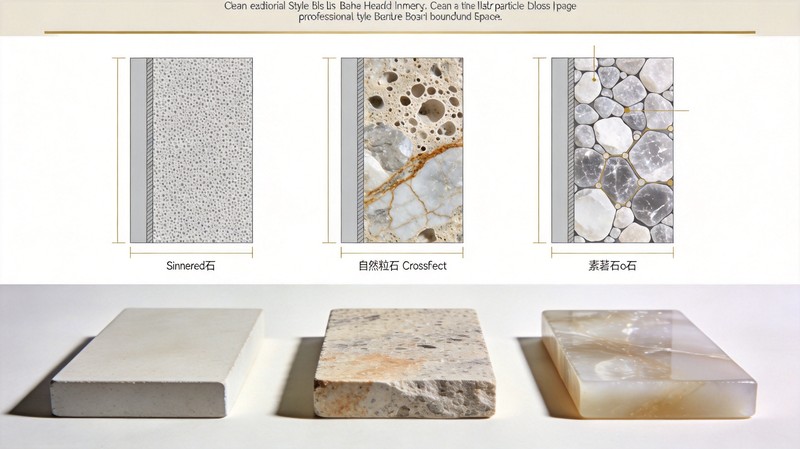
Understanding Sintered Stone: A Technical Overview
Sintered stone is an advanced engineered surfacing material that has rapidly become a preferred choice for architects and interior designers worldwide. Made from a precise blend of natural minerals—including feldspar, silica, quartz, and clay—sintered stone is manufactured through an extremely high-pressure compression and ultra-high-temperature firing process that creates a dense, non-porous slab of exceptional strength.
For architects and designers seeking materials that combine aesthetic versatility with uncompromising performance, sintered stone represents a paradigm shift. Unlike natural stone, which is limited by its geological formation, or conventional ceramics, which lack the density for demanding applications, sintered stone occupies a unique position at the intersection of natural beauty and engineered excellence.
The Sintering Process: From Raw Materials to Premium Surface
Raw Material Selection and Preparation
The sintered stone manufacturing process begins with the careful selection of raw materials. High-purity feldspar provides the glassy matrix that binds the slab together, while silica sand contributes to the material's hardness and durability. Carefully graded clay minerals ensure proper compaction, and mineral pigments are added to achieve specific color and pattern effects.
These materials are ground to a fine powder—typically with particle sizes below 100 microns—to ensure uniform composition throughout the slab. This fine grinding is critical: it eliminates the micro-voids and inconsistencies found in natural stone and creates the dense, homogeneous structure that gives sintered stone its remarkable properties.
Pressing and Sintering
The prepared powder is fed into large hydraulic presses capable of applying forces exceeding 400 bars across the entire slab surface. This extreme compression eliminates all air pockets and ensures perfect particle-to-particle contact throughout the material. Some manufacturers employ isostatic pressing technology, which applies uniform pressure from all directions, further enhancing density and consistency.
After pressing, the green body enters the sintering furnace, where temperatures exceed 1,200°C—approaching the melting point of the mineral components. During this phase, the particles fuse together through diffusion, creating an interlocking crystalline structure without the use of any binding agents or resins. The result is a truly natural mineral composite with zero porosity.
Finishing and Quality Control
Once cooled, slabs undergo surface treatment and quality inspection. Surface finishes range from high-gloss polished to matte, honed, and textured surfaces, achieved through precision grinding and polishing wheels. Every slab is inspected for dimensional accuracy, surface consistency, and structural integrity before being graded and packaged for shipment.
Key Properties That Define Sintered Stone
Mechanical Strength and Durability
Sintered stone achieves Mohs hardness ratings of 6 to 7, placing it between quartz (hardness 7) and granite (hardness 6) in resistance to scratching. This makes it suitable for high-traffic commercial applications and heavy-use residential environments without concern for surface damage from daily wear.
The sintering process creates a flexural strength typically exceeding 35 MPa, enabling large-format slabs to be installed over substantial spans with minimal support. This strength also provides the impact resistance needed for flooring applications where heavy objects may be dropped.
Porosity and Stain Resistance
With water absorption rates below 0.1%, sintered stone is virtually non-porous. Unlike granite, which requires periodic sealing, or marble, which is susceptible to staining from common household substances, sintered stone resists penetration from liquids, oils, and acidic materials. Coffee, wine, lemon juice, and cooking oils can be wiped from the surface without leaving permanent stains.
This near-zero porosity also makes sintered stone inherently resistant to mold and bacterial growth, a critical consideration for healthcare facilities, food preparation areas, and bathroom applications where hygiene is paramount.
Thermal and UV Resistance
Sintered stone demonstrates excellent thermal shock resistance—the ability to withstand rapid temperature changes without cracking or delamination. Hot pots and pans can be placed directly on sintered stone countertops without the thermal damage that would affect quartz surfaces. Additionally, the material's UV stability means that outdoor installations will not fade or degrade over time, unlike many composite materials.
Design Versatility: Aesthetics Without Compromise
Marble and Natural Stone Effects
Advanced digital printing and multi-pass firing technologies enable manufacturers to produce sintered stone slabs with hyper-realistic marble effects, including the characteristic veining patterns found in Calacatta, Statuario, and Carrara marbles. Unlike natural marble, which varies unpredictably from slab to slab, sintered stone achieves consistent pattern reproduction across large installations.
Through-body color technology ensures that the surface pattern extends throughout the entire slab thickness, meaning that cut edges, mitred corners, and any fabrication work reveal the same visual character as the surface. This is a significant advantage over quartz surfaces, where surface-only coloring can create a stark contrast when the material is cut or shaped.
Contemporary Finishes and Textures
Beyond natural stone imitations, sintered stone offers contemporary aesthetic options including solid colors, concrete effects, metallic finishes, and innovative textured surfaces that cannot be found in nature. Textured finishes—such as leather, stone, and groove textures—add tactile dimension to walls and facades, creating architectural interest beyond surface color.
Applications Across Architectural Typologies
Kitchen and Dining Environments
In residential and commercial kitchens, sintered stone countertops have become the material of choice for clients who demand both beauty and practicality. The material's heat resistance allows direct placement of cookware, its stain resistance handles the demands of food preparation, and its hardness resists the scratching that affects softer surface materials. Large-format slabs minimize joints, creating a seamless, hygienic work surface.
Facades and Exterior Cladding
The architectural facade represents one of sintered stone's most compelling applications. The material's UV stability, freeze-thaw resistance, and ability to be produced in large formats make it ideal for ventilated curtain wall systems and direct-adhesion exterior cladding. Large format sintered stone panels—available in formats up to 1,600×3,200mm—create dramatic building exteriors with minimal joints and maximum visual impact.
Bathrooms and Wet Environments
Sintered stone excels in bathroom applications where moisture, hygiene, and aesthetics converge. Large-format wall panels eliminate grout lines in shower enclosures, creating seamless, easy-to-clean surfaces. The material's resistance to mold, mildew, and water damage ensures long-term performance in wet environments where natural stone would require extensive maintenance.
Commercial and Hospitality Spaces
In commercial environments—hotels, restaurants, retail spaces, and corporate offices—sintered stone offers the durability and low maintenance that commercial projects demand while delivering the premium aesthetic that brand identities require. The material's consistency across large areas and availability in coordinating finishes for floors, walls, and furniture make it a comprehensive design solution.
Comparison with Alternative Surface Materials
vs. Natural Marble
Natural marble remains prized for its unique, unrepeatable veining and geological authenticity. However, it requires regular sealing, is susceptible to acid etching from common foods and cleaning products, and demands significant maintenance investment over its service life. Sintered stone provides marble's aesthetic beauty without its practical vulnerabilities.
vs. Granite
Granite offers excellent hardness and heat resistance but requires periodic sealing and may show color variation between quarried slabs. Sintered stone achieves comparable or superior durability with zero maintenance requirements and consistent quality across all production batches.
vs. Quartz
Quartz surfacing contains approximately 90% natural quartz bound by approximately 10% polyester resin. While this creates a hard, non-porous surface, the resin component limits heat resistance and can yellow over time with UV exposure. Sintered stone's pure mineral composition avoids these limitations entirely.
Specification Considerations for Architects
Thickness Selection
Specifying the correct thickness is fundamental to project success. Standard countertop thicknesses include 12mm (ideal for most residential applications when mounted on suitable substrate), 15mm (appropriate for heavier-use environments), and 20mm (specified for commercial applications requiring maximum rigidity). Wall applications may use thinner formats (6-9mm), while furniture applications can leverage ultra-thin 3-6mm panels.
Format and Size Planning
Working with manufacturers who offer large-format slabs—such as MENGNA SURFACES, whose products reach 1,600×3,200mm—enables designers to minimize joints and create seamless surfaces across extensive areas. Modular planning around available slab dimensions maximizes material utilization and reduces waste.
Conclusion
Sintered stone represents a maturation of surfacing material technology—combining the aesthetic possibilities of natural stone with the engineered consistency and performance that modern architectural practice demands. For architects and designers seeking a material that performs across all metrics—durability, maintenance, aesthetics, and sustainability—sintered stone offers a compelling solution for virtually any application.
Ready to explore sintered stone options for your next project? Contact MENGNA SURFACES for technical specifications, sample requests, and expert consultation, or browse our full product catalog to discover the range of available designs, finishes, and formats.