
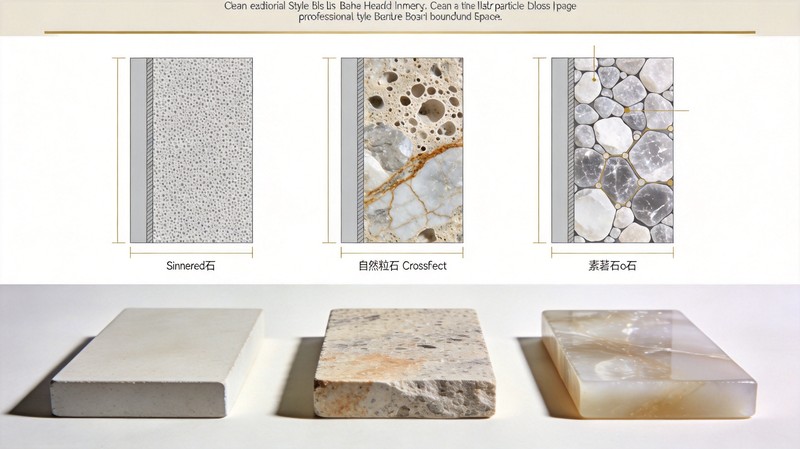
When selecting premium surface materials for contemporary interiors, architects and designers increasingly compare sintered stone vs terrazzo as leading options. Both materials offer distinct advantages—from terrazzo's timeless decorative appeal to sintered stone's exceptional technical performance. This comprehensive comparison helps you make informed decisions for your residential or commercial projects.
Understanding the Fundamentals
What is Sintered Stone?
Sintered stone represents the latest advancement in engineered surface technology. Manufactured by compressing natural mineral compounds—including feldspar, quartz, silica, and inorganic pigments—at pressures exceeding 15,000 tons and temperatures above 1,200°C, this process creates a fully vitrified, non-porous material with exceptional physical properties. The result is a surface that combines the beauty of natural stone with superior technical performance characteristics impossible to achieve with traditional materials.
What is Terrazzo?
Terrazzo traces its origins to ancient Venice, where workers discovered that discarded marble chips could be combined with clay to create durable flooring surfaces. Modern terrazzo consists of marble, quartz, granite, glass, or other suitable chips embedded in a binder—either cementitious or epoxy-based. The mixture is poured in place or precast, ground, and polished to reveal the embedded aggregates. This centuries-old technique has evolved into a sophisticated design element prized for its unlimited color and pattern possibilities.
Durability and Performance Comparison
Performance requirements vary by application, but both materials serve demanding environments effectively.
Hardness and Scratch Resistance
Sintered stone achieves Mohs hardness ratings of 6-7, matching or exceeding most natural stones. This exceptional hardness provides outstanding scratch resistance—knife marks, abrasive materials, and heavy use leave no permanent damage. Terrazzo hardness depends on the aggregate composition: marble chips rate around 3-4 Mohs, while quartz aggregates can reach 7. However, the cement or epoxy binder typically ranks lower, creating potential weak points where chip detachment or binder wear may occur over time.
Impact Resistance
Sintered stone's monolithic construction provides uniform impact resistance throughout the material thickness. Dropped heavy objects may chip the surface edge but rarely cause cracking. Terrazzo can chip at impact points, particularly with sharp heavy objects. Epoxy-based terrazzo offers better impact resistance than cement-based formulations. Edge chipping in terrazzo reveals the underlying binder color, which may require repair for aesthetic consistency.
Thermal Performance
Sintered stone demonstrates excellent thermal stability and heat resistance. Hot pots and pans placed directly on the surface cause no damage—the material can withstand temperatures exceeding 300°C without discoloration or structural changes. Terrazzo's thermal performance varies: cement-based terrazzo may experience surface crazing with sudden temperature changes, while epoxy terrazzo has lower heat resistance and may discolor or deform with sustained heat exposure above 65°C.
Aesthetics and Design Flexibility
Visual Character
Terrazzo offers unmistakable visual character through its exposed aggregate pattern. Each installation creates a unique composition of colored chips suspended in the binder matrix. The design possibilities are essentially unlimited—chip sizes range from micro (1-3mm) to standard (10-25mm), colors span the full spectrum, and patterns can be geometric, flowing, or brand-specific. This customizability makes terrazzo a favored choice for distinctive commercial interiors.
Sintered stone provides different aesthetic values: consistent coloration, realistic natural stone veining, solid colors, and increasingly, terrazzo-inspired patterns with embedded decorative elements. While not offering terrazzo's unique chip patterns, sintered stone delivers predictable aesthetics essential for projects requiring color-matched surfaces across multiple installations.
Large Format Applications
Sintered stone excels in large format applications, with slabs available up to 1600x3200mm in thicknesses from 3mm to 20mm. This capability enables seamless wall cladding, expansive countertops, and continuous flooring installations with minimal joints. Traditional terrazzo installations require control joints every 3-4 meters, which may interrupt the visual flow in contemporary minimalist designs.
Maintenance and Care Requirements
Sintered Stone Maintenance
One of sintered stone's most compelling advantages is its minimal maintenance requirement. The non-porous surface resists liquid absorption, preventing staining from coffee, wine, oil, and common household substances. Daily maintenance involves simply wiping with a damp cloth and mild detergent. The surface never requires sealing, and chemical cleaning products are generally unnecessary. For stubborn stains, mild alkaline cleaners prove effective without damaging the surface finish.
Terrazzo Maintenance
Terrazzo maintenance demands more attention. Cement-based terrazzo is porous and requires initial and periodic resealing—typically every 1-3 years depending on traffic levels. Without proper sealing, the binder absorbs liquids and stains readily. Even sealed cement terrazzo may show ring stains from prolonged liquid contact. Daily cleaning should avoid acidic substances that can etch the binder. Epoxy terrazzo offers better stain resistance but may yellow when exposed to UV light, limiting exterior applications.
Both materials benefit from regular professional polishing to maintain their shine, though sintered stone's polished finish lasts significantly longer before restoration is needed.
Cost Analysis: Sintered Stone vs Terrazzo
Material and Installation Costs
Terrazzo pricing varies significantly based on aggregate type, design complexity, and installation method:
- Cement-based precast terrazzo: $25-50 per square foot material only
- Epoxy terrazzo (monolithic): $40-75 per square foot installed
- Custom precast terrazzo with exotic aggregates: $60-150 per square foot
- Venetian terrazzo with multiple chip types: $50-90 per square foot installed
Sintered stone pricing follows different patterns:
- Standard thickness slabs (12-20mm): $15-45 per square foot material only
- Professional fabrication and installation: $20-55 per square foot
- Complex edge treatments and cutouts: additional $5-15 per linear foot
- Thin format (3-6mm) for wall cladding: $10-30 per square foot
Long-Term Value Consideration
Lifetime cost analysis favors sintered stone for most applications. The absence of sealing requirements, reduced cleaning product needs, and extended restoration intervals translate to ongoing cost savings. Terrazzo's lower initial cost may be offset by periodic maintenance expenses over a 20-year period.
Application Suitability
Commercial Flooring
Both materials perform well in commercial flooring applications. Terrazzo has dominated commercial interiors for decades, particularly in airports, shopping centers, and institutional buildings, where its design flexibility and durability are well proven. Sintered stone flooring offers faster installation through prefabricated tiles, reduced joint requirements, and superior chemical resistance—valuable for healthcare, laboratory, and food service environments.
Residential Countertops
For kitchen and bathroom countertops, sintered stone generally proves the more practical choice. Its non-porous surface handles food preparation hygiene requirements effortlessly, while heat resistance accommodates hot cookware without trivets. Terrazzo countertops are possible but require more careful use and maintenance in busy kitchens.
Wall Cladding and Facades
Sintered stone dominates vertical applications with its large format capability and light weight (especially in 3-6mm thicknesses). Terrazzo wall applications are typically limited to interior surfaces due to weather sensitivity of cement binders. Epoxy terrazzo can work on protected exterior surfaces but faces UV degradation concerns.
Environmental Considerations
Sustainability Profile
Sintered stone production uses abundant natural minerals without petroleum-based binders. The manufacturing process consumes water efficiently, and waste material can be recycled into new production batches. Many manufacturers incorporate recycled content, and the material's 50+ year service life reduces replacement frequency.
Terrazzo Sustainability
Terrazzo offers excellent sustainability through its core concept: utilizing waste materials from quarries and manufacturing. Marble chips, recycled glass, and other aggregates divert waste from landfills. However, cement-based terrazzo has a significant carbon footprint associated with cement production. Epoxy terrazzo eliminates cement emissions but introduces petroleum-derived binders.
Making Your Selection
Choosing between sintered stone and terrazzo depends on your specific project priorities:
Choose Sintered Stone When:
- Low maintenance is essential for your project
- Large format, seamless installations are desired
- Countertop and vertical applications dominate
- Predictable, consistent aesthetics are required
- Heat and chemical resistance are priorities
- Budget favors long-term value over initial cost
Choose Terrazzo When:
- Distinctive, customizable patterns are essential
- Traditional aesthetic aligns with project vision
- Commercial flooring with proven track record is required
- Custom colors and embedded logos are planned
- Project budget prioritizes initial over lifetime cost
At MENGNA SURFACES, we offer both premium sintered stone products and can connect you with terrazzo specialists for projects requiring that distinctive aesthetic. Our technical team helps architects and designers select the optimal material based on application requirements, aesthetic goals, and budget constraints.
Explore YS Sintered Stone Collections
Discover our extensive range of sintered stone products designed for contemporary interiors. From marble-look designs to terrazzo-inspired patterns, find the perfect surface for your next project.
View Product Catalog