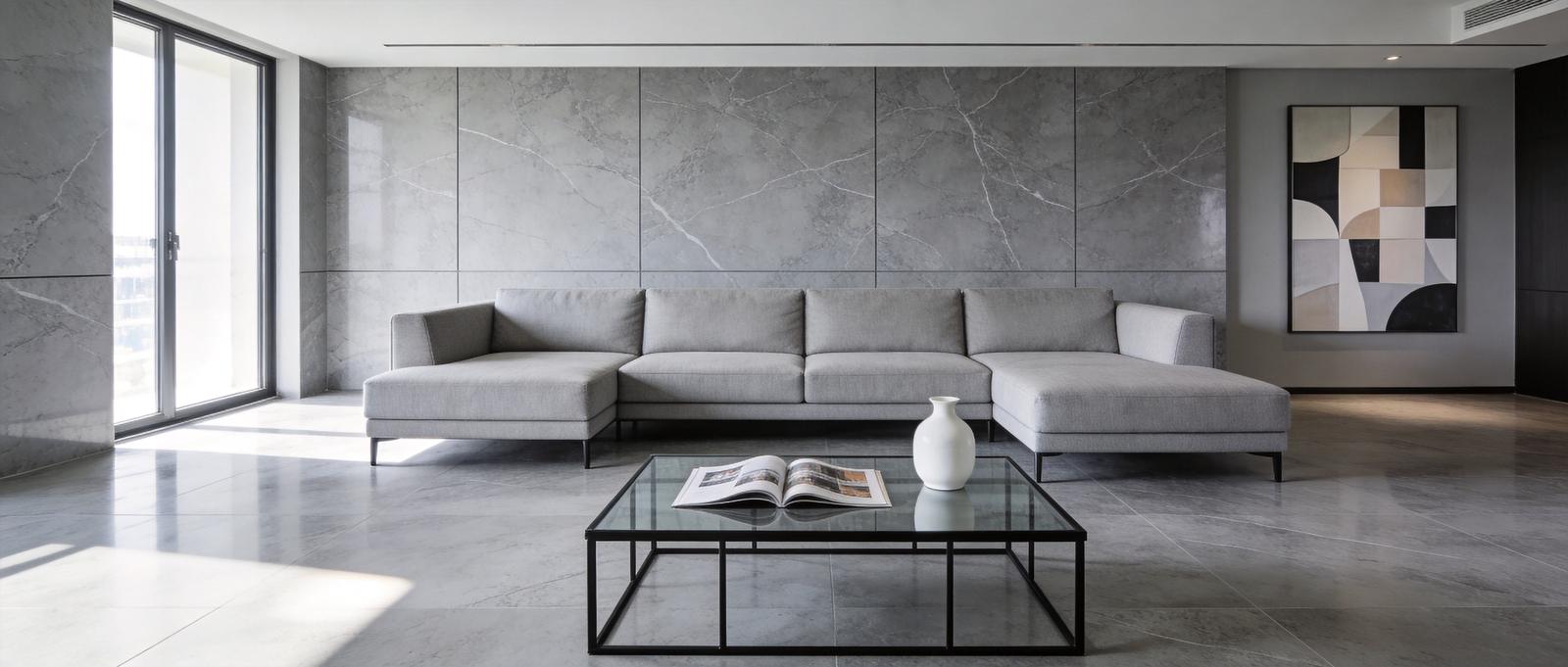
The Countertop Showdown: Understanding the Contenders
When planning a kitchen or bathroom renovation, homeowners and designers face a critical decision: sintered stone vs quartz. Both materials represent premium engineered surfaces that outperform traditional natural stone in many categories, yet they differ fundamentally in composition and performance characteristics.
This comprehensive comparison examines these two materials across the factors that matter most for residential and commercial countertop applications. By understanding their differences, you can make an informed decision that aligns with your project's specific requirements, lifestyle needs, and long-term expectations.
Manufacturing Differences: Why Composition Matters
The distinction between quartz vs sintered stone begins with how each material is manufactured. Understanding these processes explains many of the performance differences you'll encounter.
Quartz countertops (also called engineered quartz) consist of approximately 90-95% ground natural quartz aggregate bound together with polyester or epoxy resins. The mixture is pressed into slabs under vacuum and vibration, then cured. The resin binder creates a non-porous surface but introduces limitations related to thermal stability and UV resistance.
Sintered stone undergoes an entirely different manufacturing process. Raw materials—including granite minerals, silica, quartz, and natural oxides—are compressed under extreme pressure and then fired at temperatures exceeding 1,200°C. This sintering process fuses materials at the molecular level without any resin binding. The result is a completely inorganic, ultra-dense surface with exceptional performance characteristics.
Heat Resistance: The Kitchen Reality
Heat resistance often becomes the decisive factor when choosing between these materials for kitchen applications. The practical implications are significant.
Quartz surfaces can suffer permanent damage—discoloration, cracking, blistering, or surface degradation—when exposed to temperatures above 150°C. This means hot pans directly from the stove, cast iron removed from oven cooking, instant pots, and even prolonged direct sunlight through kitchen windows can compromise quartz countertops. Many homeowners unknowingly damage their quartz surfaces through everyday kitchen activities.
Sintered stone handles temperatures up to 900°C without damage. You can place hot cookware directly on the surface without concern. This thermal stability proves particularly valuable for:
- Busy family kitchens with frequent hot pot placements
- Outdoor kitchen countertops exposed to direct sunlight
- Commercial kitchens with intensive cooking equipment
- Fireplace surrounds and adjacent surfaces
At MENGNA SURFACES, we frequently recommend sintered stone for clients who prioritize practical kitchen functionality over careful material maintenance.
Durability and Scratch Resistance
Both materials offer excellent durability for countertop applications, but with different characteristics that affect long-term appearance retention.
In terms of hardness, both materials register 6-7 on the Mohs scale. However, sintered stone's homogeneous composition means it cannot be scratched through to a different layer—any surface damage reveals the same material throughout the thickness. Quartz's surface may show scratches more visibly, and the resin components can be vulnerable to damage from metal utensils and abrasive materials.
For commercial environments or busy households where countertops face daily knife use and heavy item placement, sintered stone's genuine resistance to scratching and wear provides meaningful practical advantages.
UV Resistance and Outdoor Applications
This category reveals perhaps the most fundamental difference between these materials. The resin content in quartz makes it vulnerable to ultraviolet light degradation.
Prolonged UV exposure causes quartz surfaces to:
- Fade and change color unevenly
- Become brittle and prone to cracking
- Lose surface gloss and visual appeal
- Experience binder breakdown compromising structural integrity
Most quartz manufacturers explicitly advise against outdoor installation. If you're considering outdoor kitchen countertops, poolside surfaces, or any sun-exposed applications, quartz is not a viable option.
Sintered stone's UV-stable composition makes it the clear choice for outdoor applications. At MENGNA SURFACES, our sintered stone products maintain color stability and surface integrity regardless of sun exposure, making them ideal for:
- Outdoor kitchen surfaces and BBQ areas
- Pool surrounds and spa environments
- Exterior cladding and facade panels
- Sunroom and conservatory surfaces
Chemical Resistance and Maintenance
Countertops in kitchens and bathrooms face exposure to various chemicals—from cooking ingredients to cleaning products. Material selection affects both maintenance requirements and long-term appearance.
Quartz surfaces can be damaged by strong acids (including lemon juice, vinegar, and wine), alkaline substances, and certain cleaning chemicals. The resin binder is vulnerable to chemical attack, which can cause surface etching, dullness, or permanent staining requiring professional restoration.
Sintered stone demonstrates exceptional chemical resistance, withstanding exposure to acids, alkalis, and most household chemicals without damage or surface degradation. This makes sintered stone particularly suitable for:
- Kitchens where acidic foods are frequently prepared
- Laboratory and healthcare environments with strict sanitation requirements
- Food preparation areas requiring chemical cleaning protocols
- Environments where bleach or strong disinfectants are regularly used
For maintenance, both materials are non-porous and resist staining when properly maintained. However, sintered stone's chemical resistance provides greater flexibility in cleaning product selection and reduces risk of accidental damage.
Aesthetic Options and Design Flexibility
Both materials offer extensive design possibilities, though with different aesthetic strengths.
Quartz advantages include:
- Consistent solid colors throughout the slab
- Vibrant hues difficult to achieve in natural materials
- Uniform patterns suitable for minimalist designs
- Wide availability across multiple manufacturers
Sintered stone advantages include:
- Remarkably realistic natural stone replication, including authentic marble veining
- Veining patterns that extend through full slab thickness, enabling edge treatments that reveal the pattern
- Larger format capabilities—some products available up to 1600×3600mm—enabling fewer seams
- Broader range of finishes including polished, matte, textured, and anti-slip surfaces
For projects requiring sophisticated natural stone aesthetics without the maintenance concerns, sintered stone delivers superior results. Our collection at MENGNA SURFACES includes over 3,500 designs spanning marble, granite, concrete, and solid color options.
Thickness Options and Installation Considerations
Sintered stone offers greater thickness flexibility, with options ranging from ultra-thin 3mm formats to robust 30mm slabs. This flexibility enables:
- Lightweight installations for furniture applications and wall cladding
- Standard countertop thicknesses for residential and commercial use
- Heavy-duty options for high-impact commercial environments
Quartz typically requires minimum thickness of 12-20mm for countertop applications, limiting design flexibility for certain installations. The additional weight of quartz slabs also affects transportation, handling, and installation requirements.
Cost Comparison: Initial Investment vs. Lifetime Value
Understanding costs requires examining both initial investment and lifetime value proposition.
Initial material costs are comparable for mid-range options:
- Quartz: $60-150 per square foot installed
- Sintered stone: $70-180 per square foot installed
Premium designs and proprietary technologies can increase costs for both materials. However, evaluating lifetime value often favors sintered stone:
- Quartz may require replacement if heat damage, UV degradation, or chemical etching occurs
- Sintered stone's durability often eliminates replacement considerations over building lifespan
- Reduced maintenance requirements and product longevity contribute to lower lifetime costs
For projects where countertops will face challenging conditions—outdoor exposure, heavy use, or chemical contact—sintered stone typically provides superior return on investment.
Making Your Decision: Application-Specific Recommendations
The right choice between sintered stone vs quartz depends on your specific application and priorities:
Choose quartz when:
- Installation is entirely indoors with climate control
- Budget is a primary constraint for mid-range specifications
- Solid color or uniform pattern aesthetics are preferred
- Careful maintenance practices will be followed consistently
Choose sintered stone when:
- Maximum durability and longevity are priorities
- Outdoor or UV-exposed installations are planned
- Hot cookware placement without trivets is desired
- Chemical resistance is important for the application
- Natural stone aesthetics without maintenance concerns are sought
- Ultra-thin or large format options would benefit the design
Conclusion: The Winner Depends on Your Priorities
When evaluating which countertop material wins, there is no universal answer—the optimal choice depends on your specific application, environment, and priorities.
For outdoor applications, busy kitchens, or projects demanding maximum durability, sintered stone clearly prevails. For climate-controlled interiors with careful maintenance and specific aesthetic requirements, quartz remains a viable option.
At MENGNA SURFACES, we manufacture both materials and provide objective consultation to help clients select the optimal specification for each project. Our technical team can provide samples, detailed specifications, and expert guidance for your specific requirements.
Ready to explore the right material for your project? Contact our specification team for samples and technical consultation.