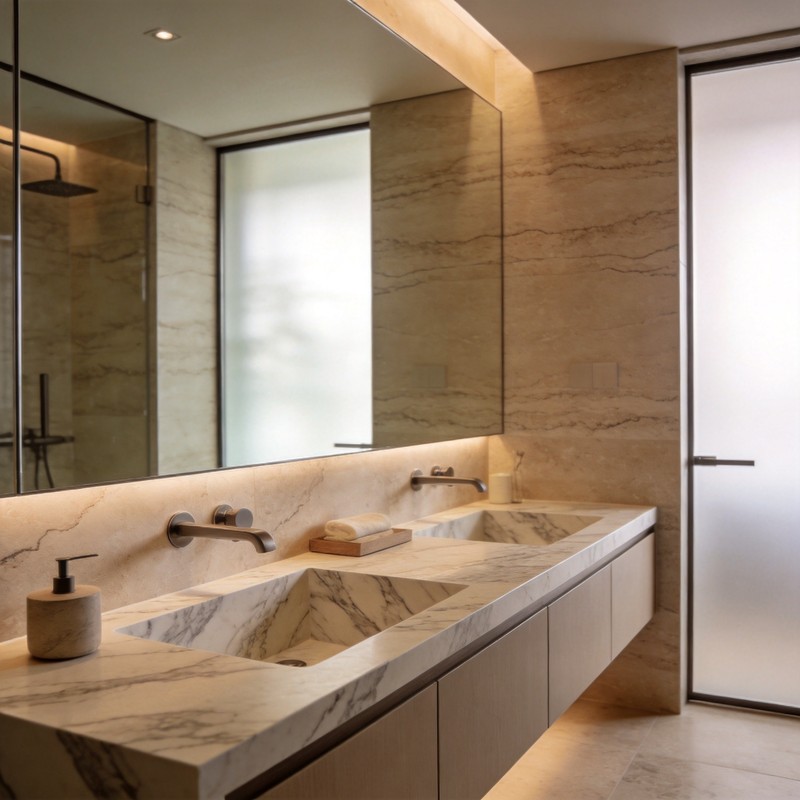
Why Sintered Stone Is the Superior Shower Wall Material
Sintered stone shower walls represent the ultimate evolution in bathroom surface technology—combining waterproof performance, hygienic surfaces, and design versatility in a material that maintains its beauty indefinitely. For architects and designers creating bathrooms that balance luxury aesthetics with practical longevity, sintered stone delivers solutions that exceed expectations.
The shower enclosure presents unique challenges that differentiate it from other bathroom applications: constant moisture exposure, temperature variations, soap and product residue, and the practical demands of daily cleaning. Traditional materials struggle with these conditions—natural stone requires sealing and stains easily, grouted tile accumulates mildew in joints, and painted surfaces deteriorate rapidly. Sintered stone addresses each challenge definitively.
Technical Advantages for Shower Environments
Zero Porosity Performance
Sintered stone's near-zero water absorption rate (<0.1%) provides fundamental advantages in wet environments:
- No water penetration: Moisture cannot enter the material to cause staining, warping, or deterioration
- Mold prevention: Without moisture absorption, mold and mildew cannot establish in the surface structure
- Hygiene maintenance: Non-porous surfaces prevent bacterial harborage that occurs in natural stone and grout
- Thermal stability: No expansion, contraction, or degradation from moisture and temperature cycles
Chemical and Stain Resistance
Shower environments expose surfaces to various chemicals:
- Soap and shampoo: Daily exposure without surface degradation or discoloration
- Cleaning products: Resistance to common bathroom cleaners including mild acids and alkalis
- Hair dyes and products: No staining from cosmetic products common in bathroom environments
- Hard water deposits: Surface does not etch or discolor from mineral deposits
Thermal Performance
Shower temperature variations require materials that can accommodate thermal stress:
- Hot water exposure: Maintains stability at shower temperatures without surface damage
- Thermal shock resistance: Sudden temperature changes do not cause cracking or crazing
- Steam resistance: Does not absorb moisture from steam that could cause issues over time
Large Format Benefits for Shower Applications
Minimized Seams
Large format sintered stone slabs (up to 1,600×3,200mm) transform shower wall aesthetics:
- Single-panel coverage: Many shower walls can be covered without any visible seams
- Grout elimination: Fewer grout lines mean no mildew-prone joints to maintain
- Visual continuity: Large surfaces create sense of spaciousness even in modest shower enclosures
- Design impact: Continuous veining patterns impossible with smaller tiles
Height Coverage Options
Shower wall heights determine panel format requirements:
- Standard height (2.1m): Most residential shower enclosures fit within a single vertical panel
- Full height (2.4-3.0m): Large format slabs accommodate taller installations without horizontal joints
- Ceiling height: Contemporary designs can extend stone to ceiling for dramatic effect
Design Pattern Continuity
Large format panels enable design features impossible with tile:
- Continuous marble veining from floor through shower enclosure
- Coordinated patterns across shower walls and adjacent bathroom surfaces
- Statement walls that extend beyond shower enclosure to bathroom at large
Design Styles and Aesthetic Options
Marble-Effect Luxury
Marble-effect sintered stone brings luxury marble aesthetics to shower environments without marble's practical limitations:
- Classic white marble: Carrara and Calacatta effects with gray veining patterns
- Dramatic marble: Bold veining in gold, gray, or black on white or colored backgrounds
- Book-matched patterns: Mirror-image installations creating symmetrical luxury
Unlike natural marble, sintered stone maintains its appearance indefinitely in shower conditions—without etching from water, staining from products, or the ongoing sealing maintenance that natural marble demands.
Minimalist Contemporary
Modern bathroom design often emphasizes clean lines and restrained palettes:
- Solid colors: Monochrome surfaces that provide visual calm and design flexibility
- Subtle textures: Light texture that adds interest without visual noise
- Matte finishes: Understated surfaces that complement contemporary fixtures
Stone and Concrete Effects
Organic material aesthetics bring warmth to shower environments:
- Natural stone replications: Authentic textures of slate, travertine, and limestone
- Concrete aesthetics: Industrial contemporary appearance with superior performance
- Terrazzo effects: Contemporary patterns with embedded aggregate visuals
Textured Surfaces
Beyond smooth finishes, textured sintered stone offers additional design options:
- 3D wall panel effects: Embossed patterns that create visual and tactile interest
- Linear textures: Directional surfaces that can make spaces feel larger
- Structured surfaces: Geometric patterns that add contemporary character
Installation Methods and Best Practices
Substrate Preparation
Proper substrate preparation is essential for successful shower wall installation:
- Cement backer board: The standard substrate for shower wall applications
- Waterproof membrane: Applied over backer board before stone installation
- Direct-to-stud installation: Possible with adequate stud spacing and structural support
- Existing tile over: Not recommended; remove old tile for best results
Adhesive Application
Proper adhesive technique ensures reliable long-term bonding:
- Back-buttering: Apply adhesive to both substrate and stone panel for complete coverage
- Notched trowel: Use appropriate notch size for panel size and substrate conditions
- Coverage requirements: Minimum 95% adhesive coverage recommended for shower applications
- Open time consideration: Account for open time when working with large panels
Joint Treatment
Where joints are necessary, proper treatment prevents water penetration:
- Silicone sealant: Flexible, waterproof joints at corners and intersections
- Color-matched options: Sealants available to complement stone colors
- Movement accommodation: Joints must allow for building movement without cracking
- Perimeter sealing: Complete sealing at all wall intersections and penetrations
Penetration Details
Shower fixtures and accessories require careful integration:
- Shower valve trim: Cutouts sized for trim installation with clean edge treatment
- Shower heads and arms: Coordination for mounting and water supply
- niches: Can be lined with matching stone for cohesive appearance
- Lighting integration: Waterproof fixture housings coordinated with stone installation
Comparison with Alternative Shower Wall Materials
Against Ceramic and Porcelain Tile
| Factor | Sintered Stone | Ceramic/Porcelain Tile |
|---|---|---|
| Seams | Minimal (large format) | Many (grout lines) |
| Maintenance | Minimal (no grout care) | Moderate (grout cleaning) |
| Mold resistance | Excellent (no organic material) | Good (epoxy grout); Poor (cement grout) |
| Design continuity | Continuous patterns | Repeating tile pattern |
| Installation complexity | Professional required | DIY possible |
Against Natural Stone
| Factor | Sintered Stone | Natural Stone |
|---|---|---|
| Sealing required | No | Yes (ongoing) |
| Stain resistance | Excellent | Requires sealing; can stain |
| Etch resistance | Excellent | Poor (acidic substances) |
| Pattern consistency | Consistent | Natural variation |
| Maintenance | Simple cleaning | Regular sealing, special cleaners |
Against Acrylic and Cultured Stone
| Factor | Sintered Stone | Acrylic/Cultured Stone |
|---|---|---|
| Heat resistance | Excellent (900°C+) | Limited (can deform) |
| Scratch resistance | Excellent | Moderate |
| Design range | Extensive | Limited patterns |
| Repairability | Difficult | Easy (surface repairs) |
| Longevity | Lifetime | 10-20 years |
Shower Niche Design
Built-in niches provide essential storage while maintaining clean wall surfaces:
- Coordinated stone: Line niches with matching sintered stone for seamless appearance
- Integrated lighting: LED strips in niches create practical illumination
- Glass shelf inserts: Glass shelves in stone-framed niches provide adjustable storage
- Standard dimensions: Design niches to standard insert sizes for flexibility
Maintenance and Long-Term Care
Daily Maintenance
Sintered stone shower walls require minimal daily care:
- Squeegee: Quick squeegee after shower removes most water and prevents deposits
- Rinse: Plain water rinse after cleaning removes soap residue
- Ventilation: Adequate exhaust ventilation reduces moisture and speeds drying
Weekly Cleaning
Weekly maintenance keeps surfaces pristine:
- pH-neutral cleaner: Warm water with mild soap or dedicated stone cleaner
- Soft cloth or sponge: Avoid abrasive materials that might dull polished surfaces
- Soft water benefits: Water softeners reduce hard water deposit buildup
Problem Solving
Address common shower issues with appropriate solutions:
- Hard water deposits: Diluted vinegar or specialty scale removers
- Soap scum: Mild alkaline cleaners or combination shower cleaners
- Silicone mildew: Bleach-based mold removers (stone unaffected); re-caulk as needed
Spa and Wet Room Applications
Beyond standard showers, sintered stone excels in comprehensive wet environments:
- Full wet rooms: Floor-to-ceiling sintered stone throughout eliminates all vulnerable materials
- Steam rooms: Sintered stone handles steam environments; check specifications for temperature limits
- Hammam installations: Traditional steam bath design with modern material performance
- Pool house showers: Chlorine resistance ensures longevity in pool house environments
Conclusion
Porcelain and sintered stone shower walls represent the premium solution for bathrooms that demand both exceptional aesthetics and practical performance. The material's waterproof nature, stain resistance, and minimal maintenance requirements create shower environments that maintain their beauty through years of daily use.
For architects and designers specifying bathroom materials, sintered stone offers the design range of natural materials with performance characteristics that exceed even the most demanding specifications. Explore our bathroom design guide for comprehensive application guidance, or learn about surface finish options for your project requirements.
Ready to specify sintered stone shower walls for your next project? Contact MENGNA SURFACES for technical specifications, sample availability, and consultation on shower wall applications for your specific requirements.