
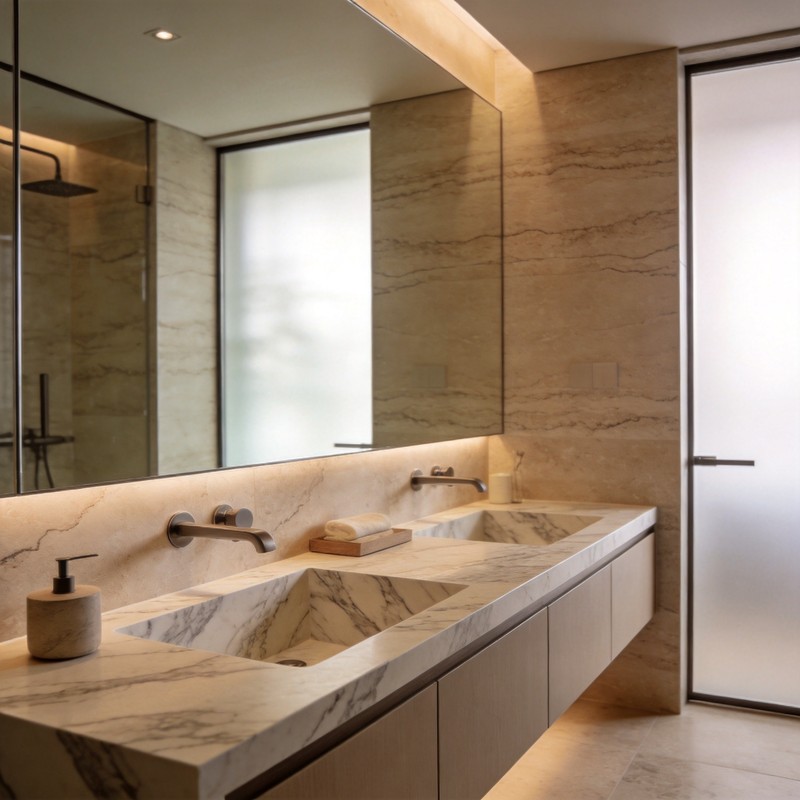
Bathroom flooring demands exceptional performance: constant moisture, chemical exposure, impact resistance for dropped objects, and safety under wet feet. Sintered stone bathroom flooring delivers all this while achieving the luxury aesthetics that transform functional spaces into personal retreats. This comprehensive guide covers everything from material selection to maintenance.
Understanding Bathroom Flooring Challenges
Bathrooms present unique demands that generic flooring materials cannot adequately address. Water splashing, humidity fluctuations, cosmetic product spills, cleaning chemicals, and the thermal stress of hot showers all challenge floor materials. Traditional options each carry limitations:
- Natural marble: Beautiful but stains readily from cosmetics and toiletries; requires annual sealing; etches from acidic cleaners
- Ceramic tile: May crack with heavy impacts; grout lines trap moisture and mildew; limited design options
- Vinyl/LVT: Waterproof but scratches easily; looks less premium; shorter lifespan
- Wood/Laminate: Warps and rots in bathroom humidity; cannot be refinished when damaged
- Polished concrete: Stains without proper sealing; cold underfoot; limited aesthetics
Sintered stone overcomes these limitations through engineered performance that addresses every bathroom challenge.
The Science of Sintered Stone Performance
Sintered stone's manufacturing process creates a material fundamentally different from conventional ceramics or natural stone. Extreme pressure and heat fuse natural mineral compounds into a completely vitrified, non-porous matrix.
Waterproof Performance
With water absorption below 0.1%, sintered stone is effectively waterproof. Unlike porous materials that absorb moisture leading to mold, warping, or staining, sintered stone repels water entirely. Shower steam, splashed water, and occasional flooding cause no damage. This characteristic proves especially valuable in wet rooms and open-bathroom designs where water reaches larger floor areas.
Chemical Resistance
Bathrooms expose floors to diverse chemicals: shampoo, conditioner, soap, toothpaste, hairspray, cleaning products, and more. Sintered stone resists all these substances without staining or surface damage. Even concentrated cleaning chemicals used periodically in bathroom maintenance cause no harm—though we recommend pH-neutral cleaners for routine care.
Thermal Stability
Bathrooms experience significant temperature fluctuations: hot showers raise humidity temperatures while cold drafts cool the space between uses. Sintered stone's minimal thermal expansion means no cracking, warping, or joint stress from these cycles. The material also conducts and radiates heat efficiently, making it ideal companion for underfloor heating systems.
Slip Resistance: Safety in Wet Conditions
Wet bathroom floors present slip hazards that demand serious consideration. Sintered stone offers textures engineered for safety in wet conditions.
Understanding DCOF Ratings
The Dynamic Coefficient of Friction (DCOF) measures slip resistance. Industry standards establish:
- 0.42 DCOF: Minimum requirement for level interior wet areas (building code minimum)
- 0.60 DCOF: Enhanced safety recommendation for shower floors and wet zones
- 0.80+ DCOF: Maximum slip resistance for commercial wet areas
Texture Options by Zone
Different bathroom zones warrant different textures:
- Master bathroom general floor: R10 rated textures (DCOF 0.40-0.50) provide good safety with aesthetic appeal
- Shower floors: R11-R12 rated textures (DCOF 0.60+) ensure safety underfoot when wet
- Wet rooms: R11+ throughout handles continuous water exposure
- Guest bathroom (low moisture): Polished or semi-polished finishes acceptable with care
European Slip Resistance Standards
The DIN 51130 ramp test used in European markets rates surfaces from R9 (lowest) to R13 (highest). MENGNA SURFACES offers products across the range:
- R9: Semi-polished finishes for low-traffic, low-moisture areas
- R10: Standard matte finishes for general bathroom use
- R11: Textured finishes for shower areas and wet rooms
- R12: Structured surfaces for commercial and accessible bathrooms
Design Options for Every Aesthetic
Marble Look
Marble aesthetics remain the quintessential luxury bathroom choice. Sintered stone marble-look designs replicate Statuario, Calacatta, and Carrara patterns with remarkable fidelity. Unlike natural marble, these designs offer consistent quality—every tile matches the sample, eliminating the natural stone gamble. The non-porous surface maintains pristine appearance despite the cosmetics and toiletries that quickly stain natural marble.
Concrete Contemporary
Modern industrial aesthetics call for concrete-inspired sintered stone. Available in warm and cool greys, these designs create sophisticated contemporary bathrooms. Matte finishes enhance authenticity while providing excellent slip resistance. Large format tiles minimize joints for clean, monolithic installations.
Terrazzo Revival
Terrazzo patterns bring playful character to bathroom floors. Speckled chips in various colors create depth and visual interest. Textured finishes provide safety where needed while maintaining the terrazzo aesthetic throughout the space.
Stone and Slate Natural
Authentic natural stone aesthetics—granite, slate, travertine—reproduced in sintered stone offer the beauty of natural materials with superior performance. Each collection captures the unique character of its natural inspiration while eliminating sealing requirements and maintenance concerns.
Installation Methods
Traditional Thin-Bed Installation
Standard installation uses thin-set mortar applied with notched trowels:
- Prepare substrate: ensure concrete or cement board is level, clean, and dry
- Apply waterproof membrane over substrate in wet areas
- Spread thin-set mortar with appropriate notched trowel (6-8mm for 600mm tiles)
- Butter back of tiles with thin-set for better adhesion
- Set tiles with slight twisting motion; use leveling system for large formats
- Allow minimum 24 hours before grouting
Large Format Tile Considerations
Large format sintered stone tiles (600x1200mm or larger) require special techniques:
- Use larger notched trowels (10-12mm) for proper mortar coverage
- Employ tile leveling systems to prevent lippage between adjacent tiles
- Two-person handling required due to size and weight
- Professional cutting equipment (bridge saws or waterjets) for custom cuts
- Plan layout to minimize cuts and ensure even distribution
Thin Format Installation (3-6mm)
Thin sintered stone formats enable adhesive installation directly over existing tiles:
- Minimal height addition preserves door clearance
- Requires perfect substrate—existing tiles must be flawless and well-bonded
- Lightweight format simplifies handling
- May require trim pieces for edge transitions
Underfloor Heating Compatibility
Sintered stone pairs perfectly with underfloor heating systems. The material's thermal conductivity efficiently transfers heat from heating cables or pipes to the room surface, while its thermal mass helps regulate temperatures.
Hydronic (Water) Systems
Pipe systems embedded in screed below tile installation:
- Install heating pipes, pour screed, allow full cure (typically 3-4 weeks)
- Apply waterproof membrane if bathroom application
- Install sintered stone with standard thin-set method
- Allow extended cure time before first heating (follow screed manufacturer guidance)
Electric Cable Systems
Loose cable or mat systems installed directly below tiles:
- Embed cables in self-leveling compound over substrate
- Install waterproof membrane if required
- Apply thin-set mortar and set sintered stone tiles
- Connect thermostat and test before grouting
Sintered stone conducts heat efficiently, warming quickly when heating activates and maintaining comfortable floor temperatures even during winter.
Grout Selection and Maintenance
Grout Color Coordination
While sintered stone itself never stains, grout requires consideration:
- Matching grout: Choose grout color close to tile for seamless appearance
- Contrast grout: Dark grout with light tiles emphasizes geometric pattern
- Epoxy grout: Most stain-resistant option; impervious to moisture and chemicals
- Cement grout: Requires sealing; more affordable but higher maintenance
Grout-Free Option: Large Format
Large format tiles (1200x1200mm or 600x1200mm) minimize grout lines dramatically. With minimal joints, the floor appears nearly seamless while still allowing for structural movement. This approach combines aesthetic appeal with reduced maintenance.
Grout Care
Keep grout lines clean through routine maintenance:
- Sweep or vacuum regularly to prevent abrasive particle accumulation
- Clean grout with pH-neutral cleaner; avoid bleach on colored grouts
- Seal cement grouts annually with appropriate sealer
- Touch up stained grout sections with grout colorant if needed
Zone-Specific Recommendations
Master Bathroom
Large master bathrooms benefit from expansive sintered stone flooring. Use large format tiles (1200x1200mm) to create spacious feel. Consider marble-look designs for luxury aesthetics. Integrate matching wall cladding for cohesive design language. Underfloor heating enhances comfort during morning routines.
Family Bathroom
Family bathrooms demand practical performance: choose textured finishes (R10+) for safety, durable patterns that conceal wear, and easy-clean surfaces. Medium format tiles (600x600mm) balance visual impact with practical installation. Solid colors or busy patterns hide the dirt and wear of daily family use.
Shower Floors
Shower floors require maximum slip resistance: select R11-R12 textured sintered stone. Smaller mosaic formats (100x100mm or smaller) accommodate necessary slope toward drains. Dark grout hides the discoloration that shower humidity causes. Consider contrasting floor and wall materials for visual definition of the wet zone.
Wet Rooms
Wet room designs extend sintered stone throughout the entire bathroom. All floor areas require R11+ textured finish. Proper drainage design creates the gentle slope toward linear drains. Glass panels or open layouts maintain the wet room aesthetic while containing splash zones.
Guest Bathroom/Powder Room
Low-traffic guest bathrooms allow more aesthetic flexibility. Polished or semi-polished finishes work here since moisture exposure is minimal. Consider decorative patterns or bold colors that would be too busy for family spaces. Smaller format tiles are appropriate where large format would overwhelm the room.
Transform Your Bathroom with Sintered Stone
Explore MENGNA SURFACES' extensive bathroom flooring collection. Our team provides technical guidance on slip resistance, installation, and design coordination for your project.
View Bathroom Flooring Options