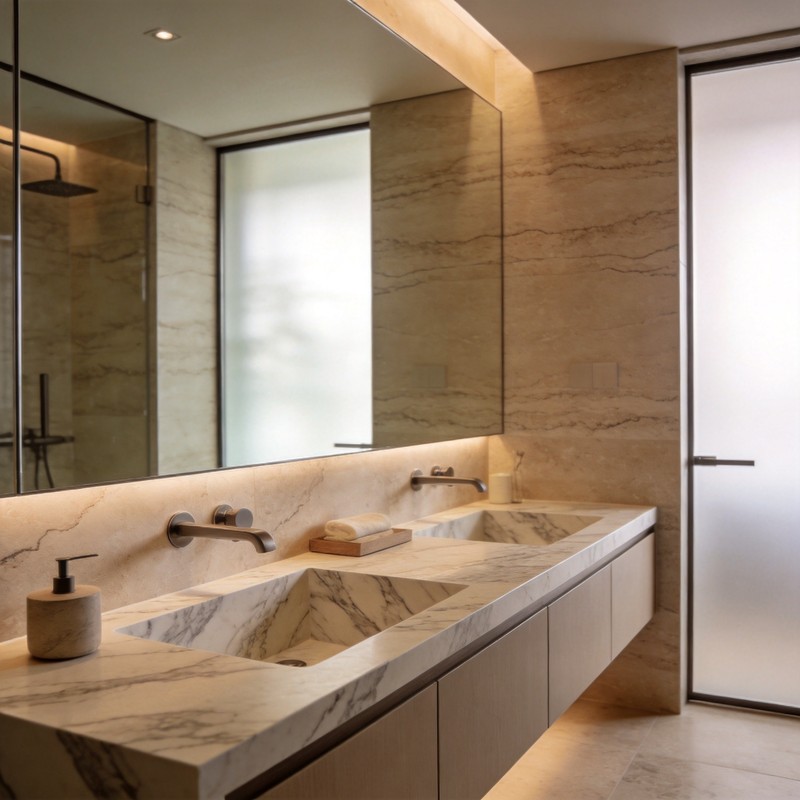
Bathroom renovations represent significant investments in home improvement, and material selection determines both immediate visual impact and long-term satisfaction. Sintered stone has transformed bathroom design possibilities, offering performance characteristics that solve common renovation challenges while delivering the aesthetic elegance that homeowners and designers demand.
The Case for Sintered Stone in Bathroom Design
Bathrooms present demanding conditions that challenge most surfacing materials: constant moisture exposure, temperature fluctuations, chemical contact from personal care products, and high traffic requiring durability. The gap between traditional tile and premium solid surface options has left homeowners compromising between practicality and beauty.
Sintered stone bridges this gap decisively. The material's near-zero porosity creates inherent waterproofing without sealants or special treatments. Surface hardness exceeding Mohs 6 provides scratch and impact resistance that maintains pristine appearance despite family use. Thermal stability handles hot tools and temperature changes without damage. These properties combine with unlimited design possibilities to create bathroom surfaces that perform and impress.
Shower Enclosures and Wet Room Design
Contemporary bathroom design increasingly favors open-concept shower spaces that blur boundaries between wet and dry areas. These wet room designs demand materials capable of handling continuous water exposure while creating the seamless aesthetic that defines modern bathroom style. Sintered stone panels address both requirements elegantly.
Large Format Shower Walls
Sintered stone slab sizes up to 1620x3240mm enable shower wall installations with minimal joints. Single panels can span entire shower walls from floor to ceiling, eliminating grout lines that collect mold and demand scrubbing. The visual continuity creates luxurious spaciousness impossible with tile installations, while the practical benefits of reduced cleaning requirements prove equally valuable.
Panel thicknesses from 3mm to 12mm accommodate various installation approaches. Thinner panels adhered directly to substrate minimize thickness addition, important in renovations where existing dimensions constrain new construction. Thicker panels provide additional impact resistance and can be installed with visible mechanical fixings in industrial-style designs that embrace exposed hardware.
Zero-Threshold Shower Systems
Accessible bathroom design favors zero-threshold showers that eliminate barriers for users with mobility challenges. Sintered stone's dimensional precision enables consistent floor level throughout bathroom and shower areas, creating safe navigation while maintaining design elegance. The material's slip-resistant options provide secure footing even when wet, essential for the mobility challenges these designs address.
Bathroom Flooring Applications
Flooring selections fundamentally shape bathroom atmosphere while demanding the performance characteristics that moisture-heavy environments require. Sintered stone flooring solutions address both design aspirations and practical requirements that determine long-term satisfaction.
Heated Floor Compatibility
Radiant floor heating systems pair excellently with sintered stone flooring. The material's thermal conductivity efficiently transfers heat from underfloor systems into living spaces, while thermal stability prevents damage from temperature cycling. Unlike some flooring materials that require specific installation approaches for heated floors, sintered stone accepts standard underfloor heating installation methods.
The combination of warm floors and warm stone creates bathroom comfort impossible with ceramic tile or natural stone that feel cold underfoot. Homeowners specify sintered stone over heated subfloors specifically for this thermal comfort, combining energy efficiency with tactile pleasure in daily routines.
Slip Resistance Requirements
Bathroom safety demands careful attention to slip resistance, particularly in wet areas. Sintered stone products include specialized finishes achieving R10-R11 slip resistance ratings when wet. These surfaces provide reliable grip for bare feet while maintaining the cleanable, hygienic qualities that bathroom surfaces require. The textured surfaces feel comfortable underfoot despite their grip-enhancing properties.
Vanity Tops and Counter Surfaces
Bathroom vanity areas demand surfaces that withstand cosmetics, toothpaste, hot styling tools, and impacts from dropped objects. Sintered stone vanity tops address each challenge while providing the refined appearance that anchors bathroom design.
Integrated Basin Options
Sintered stone's versatility enables integrated basin designs that eliminate the seam between countertop and sink basin. These seamless transitions eliminate the cleaning challenges around traditional drop-in sinks while creating contemporary aesthetics that define premium bathroom design. Integrated basins can be molded in various shapes, from minimal linear designs to organic forms that echo natural stone formations.
The same material used for vanity tops creates integrated shelves, ledges, and soap dishes that match precisely with surrounding surfaces. This material continuity throughout bathroom surfaces creates cohesive design that elevates perceived quality and simplifies maintenance routines.
Edge Detail Possibilities
Sintered stone fabrication enables edge details ranging from sharp contemporary miters to softly rounded profiles. Waterfall edges that continue material down cabinet faces create dramatic statements in modern bathroom designs. Beveled edges soften appearance in traditional settings. The fabrication flexibility ensures that material selection never constrains design vision.
Complete Wall Cladding Systems
Bathroom walls beyond shower enclosures benefit from sintered stone cladding that unifies bathroom aesthetics while providing the moisture resistance essential for humid environments. Full-height wall cladding creates spatial definition while protecting underlying structure from moisture damage.
Feature Wall Applications
Statement walls using bold sintered stone patterns create focal points that anchor bathroom design. Large format slabs showcase dramatic marble reproductions or contemporary abstract patterns that become the visual center of bathroom composition. The material's light weight compared to natural stone of equivalent thickness simplifies installation on existing walls, enabling dramatic transformations without structural modifications.
Moisture Zone Planning
Effective bathroom design recognizes moisture gradients across different zones. High-exposure areas around showers and baths justify premium sintered stone specification, while lower-exposure wall areas might utilize complementary materials. Strategic sintered stone placement maximizes visual impact and practical performance while optimizing material costs across the renovation budget.
Maintenance and Hygiene Considerations
Bathroom maintenance requirements significantly impact daily life satisfaction and long-term ownership costs. Sintered stone's inherent properties minimize maintenance compared to alternatives, reducing the effort and expense required to maintain pristine bathroom conditions.
Cleaning Requirements
Sintered stone bathroom surfaces clean easily with mild soap and water or pH-neutral cleaning products. The non-porous surface prevents stains from cosmetics, hair products, and toiletries that permanently damage natural stone. Soap residue wipes away completely without the scrubbing that porous materials demand. Hard water deposits respond to vinegar solutions without risking surface damage.
Mold and Mildew Resistance
The moisture resistance of sintered stone prevents the mold and mildew growth that plagues tile grout and natural stone bathroom installations. Without organic material to support biological growth and with surfaces that dry completely after cleaning, sintered stone bathrooms remain hygienic without chemical treatments or intensive scrubbing.
Design Style Coordination
Sintered stone's design versatility accommodates bathroom styles from minimal contemporary to traditionally inspired luxury. Material selection and pattern coordination with other design elements determine final aesthetic outcomes.
Contemporary Minimalist Bathrooms
Modern bathroom design favors clean lines, minimal ornamentation, and seamless surfaces. Large format sintered stone slabs minimize visual interruption, while consistent patterns across wall and floor surfaces create the unified environments that define contemporary style. Neutral color palettes in white, gray, and black provide timeless elegance that adapts to evolving accessory and fixture selections.
Luxury Spa Retreats
Premium bathroom renovations increasingly aim to create home spa experiences that rival commercial wellness facilities. Sintered stone's ability to replicate rare natural stones enables marble-effect surfaces that establish luxury atmosphere without the maintenance and durability concerns of natural marble. Book-matched patterns create dramatic statements in large master bathrooms.
Nordic and Scandinavian Styles
Nordic bathroom design emphasizes natural light, clean surfaces, and practical functionality. Light-colored sintered stone in white and warm gray tones reflects available light, enhancing the bright, airy atmosphere characteristic of Scandinavian interiors. The material's warmth underfoot compared to ceramic tile aligns with Nordic comfort priorities.
Budget Planning and Cost Analysis
Bathroom renovation budgets require careful allocation across materials, labor, and contingencies. Sintered stone materials typically represent higher initial investment than tile or entry-level surfaces, but lifecycle cost analysis often favors premium specification.
Material Cost Comparison
Sintered stone pricing varies by brand, thickness, and pattern complexity. Premium large format slabs command higher prices but reduce installation labor through faster coverage rates. Entry-level sintered stone products compete directly with high-end ceramic tile while offering significantly superior performance characteristics. The value proposition improves further when considering maintenance cost elimination and replacement timeline extension.
Installation Factor
Professional installation represents significant bathroom renovation cost regardless of material selection. Large format sintered stone installations often complete faster than equivalent tile work due to faster coverage rates, potentially offsetting higher material costs with reduced labor expenses. However, sintered stone requires specialized cutting equipment and experienced fabricators for complex details, factors that influence total project cost.
Renovation Process Considerations
Bathroom renovations disrupt household routines, making timeline optimization important for homeowner satisfaction. Material selection influences renovation duration through installation complexity and curing requirements.
Timeline Impacts
Sintered stone shower installations may require slightly longer cure times for adhesives and sealants compared to tile, potentially adding days to renovation schedules. However, the elimination of grout curing time and reduced need for precision adjustments can offset these additions. Professional installers experienced with sintered stone optimize workflows to minimize total project duration.
Existing Conditions
Renovation over existing surfaces can significantly reduce renovation scope and cost. Sintered stone's dimensional stability and adhesion compatibility enable installation over prepared existing tiles or waterproof membranes in many conditions. Structural assessment determines whether existing conditions support direct overlay or require removal before new installation.
Environmental and Health Considerations
Indoor air quality and material safety influence bathroom material selection, particularly for households with allergy sufferers or chemical sensitivities. Sintered stone's inherent properties address these concerns.
VOC Emissions
Sintered stone products emit virtually no volatile organic compounds once cured. The manufacturing process creates stable, inert materials that contribute nothing to indoor air contamination. This characteristic makes sintered stone suitable for households prioritizing indoor air quality and those with chemical sensitivities.
Allergen Prevention
The smooth, non-porous surface of sintered stone does not harbor dust mites, mold, or other common bathroom allergens. Regular cleaning maintains the hygienic surfaces that protect family health, particularly important for households with allergy or asthma sufferers who react strongly to biological contamination in indoor environments.
Conclusion
Sintered stone has established itself as the definitive material for premium bathroom renovations. Its combination of waterproof performance, design versatility, hygiene benefits, and maintenance simplicity addresses the demanding requirements of bathroom environments while delivering the aesthetic elegance that homeowners and designers require.
Whether renovating compact family bathrooms or expansive master suites, sintered stone specification provides performance guarantees and visual quality that ensure long-term satisfaction. The initial investment delivers returns through reduced maintenance, extended replacement timelines, and enhanced property value that justify premium material selection.