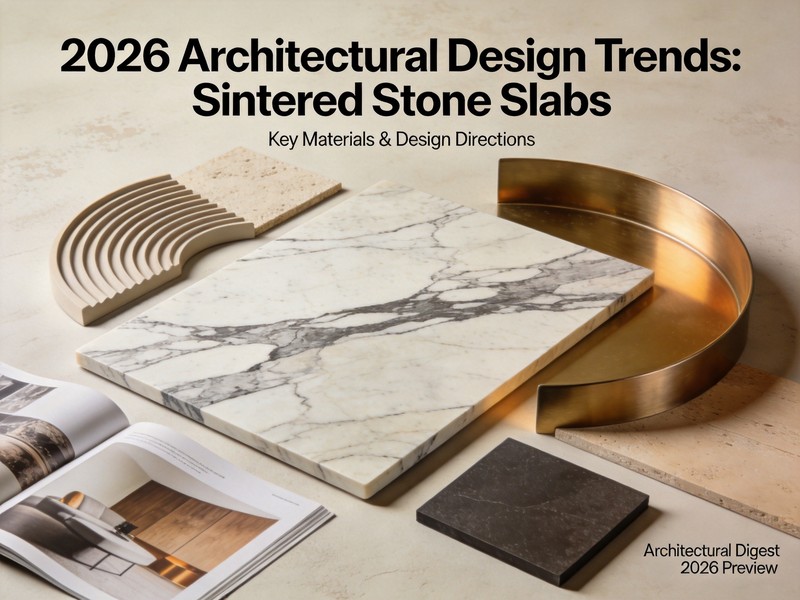
Germany has long been Europe's benchmark for precision engineering and material quality—and the architectural surfaces market is no exception. In 2026, Feinsteinzeug (the German term for sintered stone/porcelain stoneware) is reshaping how German architects, Architekten, and contractors approach specification. From the modernist apartments of Berlin-Mitte to the timber-hybrid office buildings of Munich, sintered stone Germany applications are setting new standards in performance, sustainability, and design. This comprehensive guide explores what makes Germany's market unique and how MENGNA SURFACES serves as a trusted supplier of premium sintered stone for the German construction industry.
Understanding Feinsteinzeug: The German Standard for Sintered Stone
In the German-speaking market, Feinsteinzeug is the established term for high-density, low-porosity ceramic materials. It is not merely a translation—it carries the weight of Germany's rigorous engineering culture and its demanding approach to material specification. When a German architect specifies Feinsteinzeug, they expect a material that meets precise technical criteria: water absorption below 0.5% per DIN EN 14411 Group BIa, frost resistance per DIN EN ISO 10545-12, and flexural strength exceeding 35 N/mm².
Sintered stone pushes these boundaries further. By achieving water absorption below 0.1%—well within the Feinsteinzeug category but at the extreme end of performance—sintered stone represents the evolution of what this material class can deliver. In Germany, this distinction matters. Architects and building engineers (Bauingenieure) who have worked with traditional porcelain stoneware for decades are discovering that sintered stone offers capabilities that even premium Feinsteinzeug could not previously achieve.
German and European Standards: The DIN EN Framework
Germany's standards system is among the most rigorous in the world. For sintered stone and Feinsteinzeug, the applicable standards form a comprehensive framework that covers every aspect of material performance:
- DIN EN 14411: The fundamental classification standard for ceramic tiles. Sintered stone is classified as Group BIa—trockengepresste keramische Platten mit einer Wasseraufnahme ≤0,5%. Premium sintered stone achieves ≤0.1%, placing it at the absolute top of this classification.
- DIN EN ISO 10545 (all parts): Comprehensive test methods covering dimensions, surface quality, water absorption, bending strength, impact resistance, thermal shock, frost resistance, chemical resistance, and stain resistance. Each part provides critical performance data for specification.
- DIN EN 12004: Classification of adhesives for ceramic tiles. For sintered stone installations, C2TE S1 or C2TE S2 classification is required, ensuring the adhesive can accommodate the material's dimensional stability and any thermal movement.
- DIN EN 13501-1: Fire classification. Sintered stone achieves A1 (nicht brennbar/non-combustible), the highest possible classification, making it suitable for all building classes including Hochhäuser (high-rises) subject to strict fire regulations.
- DIN 18511-5: For ventilated facade applications (vorgehängte hinterlüftete Fassade/VHF), this standard governs the installation of ceramic cladding on exterior wall systems—a critical reference for German architects specifying sintered stone for building envelopes.
MENGNA SURFACES products comply with all applicable DIN EN standards. Our complete test documentation is available through our quality assurance portal, providing German architects and Prüfingenieure with the data they need for building authority (Bauamt) submissions.
Why German Architects Are Specifying Sintered Stone
Germany's construction culture prizes Gründlichkeit (thoroughness), longevity, and technical excellence. Sintered stone aligns perfectly with these values, addressing several key concerns that German architects face in 2026.
The Energiewende and Building Envelope Performance
Germany's energy transition (Energiewende) has driven increasingly stringent building energy requirements under the GEG (Gebäudeenergiegesetz). For ventilated facade systems, the cladding material must contribute to the overall thermal performance without adding excessive weight. Sintered stone's availability in 6mm ultra-thin format—weighing just 15 kg/m²—allows architects to specify premium exterior finishes without compromising insulation thickness or structural design. This is particularly relevant for the Sanierung (renovation) of Germany's vast existing building stock.
Frost Resistance for Central European Climate
Germany's climate ranges from maritime influence in the northwest to continental extremes in Bavaria and Saxony. Winter temperatures regularly drop below -15°C in many regions, creating demanding freeze-thaw conditions. Sintered stone's near-zero water absorption (<0.1%) means no water penetrates the material body, eliminating the risk of freeze-thaw damage that can affect more porous materials. It passes the most rigorous DIN EN ISO 10545-12 freeze-thaw cycling tests with zero degradation.
Sustainability and the DGNB System
The DGNB (Deutsche Gesellschaft für Nachhaltiges Bauen) is Germany's leading sustainable building certification system. Sintered stone supports DGNB criteria across multiple categories:
- ENV1.2 (Risk potential of materials): 100% natural raw materials with no VOC emissions or harmful substances.
- ENV1.4 (Life cycle assessment): 50+ year service life with no degradation in performance or appearance.
- SOC1.3 (Thermal comfort): High thermal mass of large format slabs contributes to passive temperature regulation.
- TEC1.3 (Fire safety): A1 fire classification supports the highest fire safety requirements.
Design Trends in German Architecture 2026
German architectural design in 2026 balances Sachlichkeit (objectivity/functionality) with a growing appetite for organic warmth and tactile surfaces. Key trends include:
Concrete and Mineral Effects (Betonoptik)
The raw, honest aesthetic of exposed concrete—central to the legacy of Bauhaus and Brutalismus—remains deeply influential in German architecture. Sintered stone in concrete-effect finishes (Betonoptik) allows architects to achieve this aesthetic in interior applications where structural concrete is not feasible, while delivering superior hygiene and maintenance characteristics.
Warm Neutrals and Stone Textures
Moving away from the clinical whites and greys of the 2010s, German interiors are embracing warmer, more textured palettes. Sintered stone finishes that evoke natural sandstone, travertine, and warm limestone are increasingly popular in residential bathrooms, hotel lobbies, and office reception areas.
Large Format Minimising Joints (Fugenminimierung)
German architects and clients share a strong preference for clean, minimal surfaces. Large format slabs (1600x3200mm and 1620x3240mm) dramatically reduce the number of visible joints, creating seamless wall and floor surfaces that are both aesthetically superior and more hygienic. This is particularly valued in healthcare facilities and food preparation areas.
Sintered Stone Applications Across German Building Types
The versatility of sintered stone makes it suitable for the full range of German construction projects:
- Wohnungsbau (Residential): Kitchen worktops (Küchenarbeitsplatten), bathroom wall cladding, and flooring in both new-build and renovation projects. The ultra-thin 6mm format is ideal for Altbausanierung (period property renovation) where floor height is limited.
- Gewerbebau (Commercial): Office lobbies, retail flagship stores, and showroom floors requiring premium finishes with heavy-duty durability. Large format sintered stone is particularly valued in automotive showrooms and luxury retail.
- Gesundheitswesen (Healthcare): Hospital interiors, clinical environments, and care facilities where hygiene, chemical resistance, and cleanability are paramount. Sintered stone's non-porous surface resists bacterial colonisation and withstands aggressive disinfection protocols.
- Fassadenbau (Facade construction): Ventilated facade systems (VHF) for both commercial buildings and multi-storey residential. The 6mm and 9mm formats reduce substructure weight while delivering premium exterior aesthetics.
- Gastgewerbe (Hospitality): Hotels, restaurants, and spa environments combining luxury aesthetics with heavy-use performance. Sintered stone is increasingly specified in wellness areas where moisture resistance and thermal comfort are critical.
MENGNA SURFACES: Your Sintered Stone Partner for Germany
MENGNA SURFACES has established a strong reputation among German importers, distributors, and specification architects as a reliable source of premium Feinsteinzeug and sintered stone. Our advantages for the German market include:
- Full DIN EN compliance: All products tested and documented to the complete DIN EN ISO 10545 series, with German-language test summaries available on request.
- Direct shipping to Hamburg and Bremerhaven: Regular container services from Foshan with transit times of approximately 30-35 days. We handle EU customs clearance and can arrange onward delivery to any German address.
- Competitive pricing vs. European production: Our manufacturing efficiency delivers 25-40% cost savings compared to equivalent European-produced sintered stone, while maintaining the quality standards that the German market demands.
- Technical documentation for Bauamt submissions: We provide complete technical data sheets, test reports, and declarations of performance (Leistungserklärungen) formatted for German building authority requirements.
- Consistent quality and batch matching: Advanced production control ensures colour and pattern consistency across production runs—critical for large-scale German projects where visual uniformity is essential.
Explore our complete product range or contact our European sales team for project-specific pricing and sample requests.
Installation Guidelines for German Projects
Proper installation is essential for achieving the full performance potential of sintered stone. German installers should follow these guidelines in accordance with DIN standards:
- Substrate preparation: Ensure substrates are level to within 3mm over 2m, dry (residual moisture <2% for cementitious, <0.5% for anhydrite), and free of dust, grease, and release agents.
- Adhesive selection: Use C2TE S1 (or S2 for critical applications) adhesive per DIN EN 12004. Apply using the buttering-floating method for large format slabs—adhesive on both substrate and slab back—to ensure 100% coverage.
- Joint spacing: Maintain minimum 2mm joints for floors and 1.5mm for walls, using a high-quality epoxy grout for maximum durability and hygiene.
- Movement joints (Bewegungsfugen): Install perimeter movement joints and intermediate joints at 5-8 metre intervals in large areas, following the guidelines of the German tile industry association (Fachverband der Fliesenindustrie).
- Facade installation: For VHF systems, follow DIN 18511-5 requirements for mechanical fixing, including stainless steel anchors rated for the specific slab format and wind load calculations for the building location.
The Future of Feinsteinzeug and Sintered Stone in Germany
As Germany accelerates its building renovation programme, tightens energy performance standards, and continues to demand the highest quality in construction materials, sintered stone is positioned for sustained growth. The material's alignment with German values of engineering precision, environmental responsibility, and long-term thinking makes it an ideal specification for the next generation of buildings. MENGNA SURFACES is committed to supporting this growth with reliable supply, documented quality, and competitive value for German architects, contractors, and distributors.