Sintered Stone Restaurant Table Tops: Ultimate Guide for Commercial Hospitality
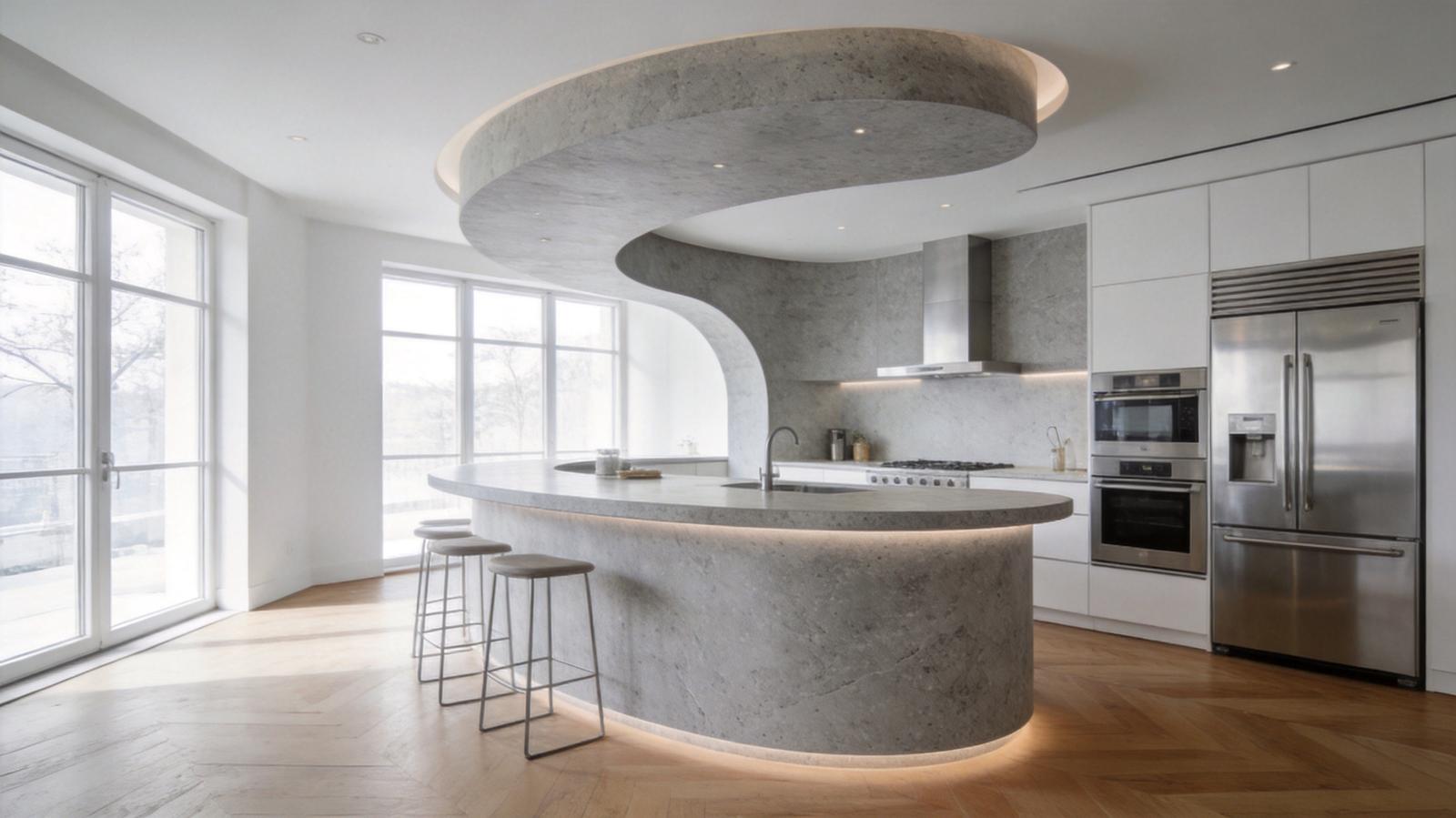
Commercial dining spaces demand furniture that balances aesthetic appeal with relentless practicality. Restaurant table tops face daily assault from hot cookware, spilled wine, sharp cutlery, and hundreds of guests navigating their dining experience. Sintered stone has emerged as the premier material for hospitality operators who refuse to compromise on either beauty or durability.
The Commercial Dining Challenge
Restaurant furniture operates under conditions far more demanding than residential settings. A table might host fifty different parties weekly, accumulating thousands of contact hours annually. Condensation from cold beverages, heat from sizzling platters, oil from food service, and the constant friction of plates and glasses create an environment where lesser materials rapidly deteriorate.
Traditional options each present significant limitations. Wood tables require refinishing every few years and absorb stains permanently. Marble offers prestige but etches from acidic substances within minutes of contact. Stainless steel provides durability but creates cold, institutional atmospheres inappropriate for most dining concepts. Laminate surfaces chip, peel, and cannot be repaired.
Sintered stone addresses these challenges through engineered performance characteristics specifically suited to commercial hospitality environments.
Thermal Performance for Hot Service
Commercial kitchens serve hundreds of covers daily, with hot food spending extended time on dining tables. Unlike quartz, which can scorch or discolor when exposed to temperatures exceeding 200°C, sintered stone withstands direct contact with cookware heated to 600°C or higher.
This thermal resistance proves particularly valuable for specialty concepts: teppanyaki tables where guests cook at the table surface, hot pot restaurants where simmering broth sits continuously on the dining surface, and live-fire cooking venues where cast iron cookware moves directly from flame to table.
Stain Resistance and Hygiene
The non-porous nature of sintered stone prevents absorption of liquids that cause staining in natural stone or wood. Red wine, coffee, olive oil, tomato sauce, and other common restaurant spills wipe clean without leaving permanent marks. This resistance maintains table appearance throughout service shifts without specialized cleaning protocols.
Hygiene considerations also favor sintered stone in commercial dining. The dense, non-porous surface does not harbor bacteria or mold in microscopic pores, as can occur with natural stone or wood. Regular sanitizing protocols effectively clean the surface, supporting food safety compliance in jurisdictions with strict hygiene requirements.
Application Environments
Fine Dining Restaurants
Upscale establishments prioritize aesthetic sophistication, and sintered stone delivers prestigious appearance through marble-look collections that rival natural stone's visual impact. The material's ability to achieve book-matched patterns—where adjacent slabs mirror each other like opening pages—creates dramatic table installations impossible with quarried stone.
Fine dining settings benefit from the material's quiet elegance: matte and textured finishes eliminate glare from candlelight and ambient lighting, while the substantial feel of stone tables conveys quality appropriate to premium price points. Guests perceive the difference in materials, associating heavy, solid surfaces with attention to detail.
Casual and Fast-Casual Dining
High-volume concepts benefit from sintered stone's durability and low maintenance requirements. Turn-and-burn operations cannot afford tables requiring daily attention or periodic refinishing. The material's scratch resistance handles rapid plate clearing and aggressive busing without visible damage.
Color selection for casual concepts typically emphasizes practical dark tones—charcoal, black, deep gray—that maintain clean appearance despite heavy use. These colors also provide flexible backdrops for varied menu presentations and seasonal decor changes.
Hotel Restaurants and Banquets
Hotel dining facilities host diverse events: intimate breakfast service, busy lunch buffets, elegant dinner service, and large-scale banquets for weddings or corporate functions. Sintered stone tables adapt to these varied requirements through flexible fabrication capabilities.
For banquet applications, large rectangular tables accommodate group seating while round tables enable flexible configuration for different event sizes. The material's consistent appearance across table sizes maintains visual cohesion throughout large function spaces.
Outdoor and Poolside Dining
Few materials successfully bridge indoor and outdoor dining applications. Natural stone can handle exterior conditions but requires sealing maintenance. Wood rots and warps with moisture exposure. Metal tables rust and become scalding hot in sunlight or uncomfortably cold in shade.
Sintered stone thrives in exterior applications. UV-stable pigments prevent fading from sun exposure, while frost-resistant composition handles cold weather without cracking. The material's thermal mass means it warms more gradually than metal in sunlight and cools more slowly in evening shade, providing more comfortable dining experiences in variable weather conditions.
Café and Coffee Shop Applications
Café environments benefit from sintered stone's resistance to the primary hazards of coffee service: hot cups, spilled beverages, and acidic condensation from cold drinks. Tables near espresso machines or drink stations endure repeated thermal shock without damage.
The material also accommodates café aesthetics: warm marble looks complement Scandinavian-inspired spaces, concrete textures suit industrial concepts, and solid colors provide flexible backdrops for varied menu boards and promotional displays.
Design and Fabrication Options
Standard Table Shapes
Sintered stone fabrication accommodates virtually any table configuration through CNC waterjet cutting and precision edge processing. Common commercial shapes include:
- Round tables: 600mm to 1,200mm diameter for 2-4 person seating
- Square tables: 600mm to 900mm for compact spaces
- Rectangle tables: 1,200mm to 2,400mm length for group dining
- Booth-end shapes: L-shaped and curved configurations for booth seating
- Communal tables: Long spans of 3,000mm or more for shared dining experiences
Edge Profiles
Edge treatment significantly impacts both aesthetic appearance and practical durability. Options range from sharp contemporary profiles to eased edges that reduce chipping risk:
- Square edge: Clean 90-degree profile for modern aesthetics
- Eased edge: Slightly rounded corners reducing chip risk
- Beveled edge: Angled cut creating visual interest and softens appearance
- Bullnose: Fully rounded edge providing soft feel and maximum safety
- Double bevel: Two angled cuts creating sophisticated profile
Base Options and Integration
Commercial table bases range from practical tubular steel to architecturally significant sculptural forms. Sintered stone tops integrate with various base configurations:
- Central pedestal: Single column support allowing maximum under-table space
- 4-leg base: Traditional support with stable footprint
- Trestle base: A-frame supports creating industrial aesthetic
- Block base: Solid pedestal creating substantial visual weight
- Custom metalwork: Branded base designs for distinctive identity
Integrated Features
Advanced fabrication enables functional features integrated into table tops:
- Wireless charging: Embedded charging pads beneath stone surface
- Warming elements: Under-surface heating for hot food presentation
- LED lighting: Edge-mounted or under-surface illumination
- Grease grooves: Integrated channels for Asian dining concepts
- Drainage: Subtle slopes directing liquid to collection points
Commercial Specifications and Standards
Load Capacity and Structural Requirements
Commercial tables must support substantial loads: multiple place settings, serving pieces, and accumulated debris during service. Sintered stone's compressive strength exceeds 250 MPa, enabling thin sections that would shatter lesser materials.
Engineering specifications typically require tables to support 150 kg distributed load and 50 kg point load without damage. Structural design should incorporate adequate support across the entire footprint, particularly for tables with extended overhangs or cantilevered sections.
Safety Considerations
Commercial furniture safety standards address edge sharpness, stability, and structural integrity. Sintered stone's fabrication flexibility enables edge treatments meeting current safety requirements while maintaining aesthetic objectives.
Stability testing verifies tables resist tipping when loaded unevenly or when force is applied to edges. Proper base design and appropriate table-to-base mounting hardware prevent tipping incidents that could cause injury.
Fire Safety and Building Codes
Hospitality venues must comply with fire safety regulations that may affect furniture selection. Sintered stone achieves A1 fire rating—the highest classification—meaning it does not contribute to flame spread and produces no toxic smoke when exposed to fire. This non-combustible characteristic supports compliance with stringent fire codes in many jurisdictions.
Cost Analysis and ROI
Initial Investment
Sintered stone restaurant tables represent premium capital investment compared to conventional materials. Typical pricing ranges from $500-2,500 per table depending on size, edge treatment, and base selection, compared to $150-400 for laminate or $300-800 for solid wood.
However, lifecycle cost analysis reveals different economics. Wood tables require refinishing every 2-3 years at $100-200 per table. Laminate tables require replacement every 3-5 years due to visible wear. Marble requires annual sealing and careful maintenance to prevent damage.
Maintenance and Operating Costs
Sintered stone's daily maintenance requires only standard cleaning protocols: wiping with damp cloth and mild detergent, rinsing, and drying. No specialized cleaning products, periodic sealing, or professional maintenance services are required.
Repair scenarios, while uncommon, are more favorable than alternative materials. Surface scratches can be polished out by trained technicians. Chips can be filled with color-matched epoxy compounds. Unlike stone or wood, the material can be refinished to like-new condition without complete replacement.
Expected Service Life
Commercial furniture lifecycle varies by concept and traffic volume, but sintered stone tables routinely exceed 15-20 years of service with proper care. This longevity substantially exceeds wood (5-10 years), laminate (3-5 years), and even granite (10-15 years requiring more maintenance).
The material's consistent appearance throughout this extended service life supports brand standards and aesthetic consistency that frequent furniture replacement cannot maintain.
Sustainability Considerations
Modern hospitality operators increasingly prioritize environmental responsibility in procurement decisions. Sintered stone offers several sustainability advantages:
- Raw material efficiency: Production uses abundant natural minerals with minimal waste
- Extended lifecycle: Reduced replacement frequency decreases cumulative resource consumption
- No sealants or treatments: Eliminates chemical products required for natural stone maintenance
- Local production: Manufacturing in China enables efficient shipping to global markets
- Recyclability: End-of-life material can be crushed and recycled into aggregate
Selection Guide
Choosing sintered stone tables for commercial applications requires balancing multiple factors:
- Traffic volume: Higher volume operations benefit from darker colors and thicker slabs
- Concept alignment: Material finish should reinforce overall design narrative
- Climate conditions: Outdoor applications require UV-stable colorants
- Service style: Tableside service concepts benefit from durable edge treatments
- Budget parameters: Balance initial investment against lifecycle costs
Conclusion
Sintered stone restaurant table tops represent the convergence of aesthetic excellence and commercial practicality. The material enables hospitality operators to achieve design visions impossible with conventional furniture materials while delivering the durability essential for demanding commercial environments.
Whether outfitting a casual café, upscale restaurant, hotel banquet facility, or outdoor dining venue, sintered stone tables provide the performance foundation that supports exceptional guest experiences. The initial investment yields returns through reduced maintenance, extended service life, and consistent appearance that reinforces brand standards throughout years of daily service.
Source Premium Sintered Stone Tables for Your Venue
MENGNA SURFACES supplies commercial hospitality operators worldwide with factory-direct pricing and professional project support. Contact our commercial team for specifications, samples, and competitive quotations.
Request Commercial PricingFrequently Asked Questions
Why is sintered stone ideal for restaurant table tops?
Sintered stone offers the ideal combination of properties for commercial dining environments: exceptional durability against scratches and impacts, stain resistance from food and beverage spills, thermal shock resistance for hot cookware, hygienic non-porous surface that inhibits bacterial growth, and aesthetic versatility that elevates any restaurant concept. Unlike wood or laminate, sintered stone maintains its appearance despite years of heavy commercial use.
Can sintered stone table tops be used outdoors?
Yes, sintered stone is one of the few materials equally suitable for indoor and outdoor dining applications. Its UV stability prevents fading or degradation from sun exposure, frost resistance handles cold weather without cracking, and non-porous structure prevents moisture absorption that damages other materials. This makes it ideal for restaurants with outdoor patios, poolside dining areas, or open-air terraces.
What table shapes can be fabricated from sintered stone?
Sintered stone can be fabricated into virtually any shape: standard rectangles and squares, custom rectangles with rounded corners, perfect circles and ovals, irregular organic shapes, L-shaped configurations for booth seating, and long communal dining tables. CNC waterjet cutting enables precise shapes while polished edges provide finished appearance.
How do sintered stone table tops compare to marble for restaurants?
While natural marble offers prestigious aesthetics, it requires significant maintenance in commercial settings: regular sealing, careful avoidance of acidic substances, vulnerability to scratching, and potential for staining. Sintered stone replicates marble's beauty while offering superior practical performance: no sealing required, resistance to acids from wine and citrus, hardness that resists scratching from cutlery, and consistent appearance throughout the table's service life.
What thickness is recommended for commercial restaurant tables?
Commercial restaurant tables typically use 12mm (approximately 1/2 inch) sintered stone for standard tables, providing adequate strength with manageable weight. For larger tables exceeding 1,500mm diameter or rectangular tables over 2,000mm length, 20mm thickness provides additional rigidity and support. Tabletops requiring cantilevered sections should be engineered with appropriate structural reinforcement.
🌍 Explore by Country
Dive deeper into sintered stone solutions tailored for your market.