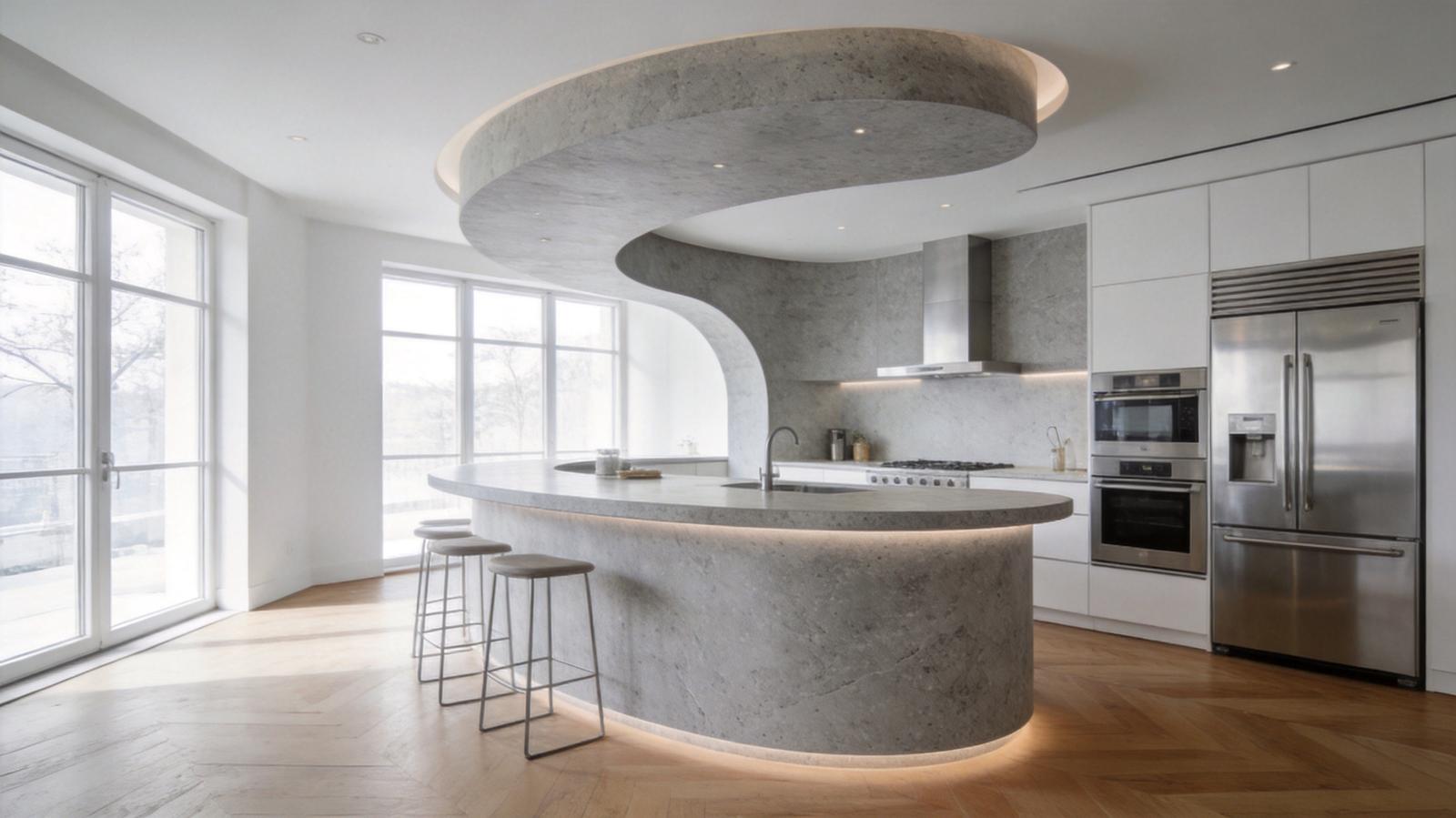
Commercial Specifications: Why Material Selection Matters
Commercial projects demand surface materials that can withstand intensive use while maintaining aesthetic appeal over years of service. Sintered stone for commercial applications has emerged as the preferred choice for architects and developers who understand that material failures in high-traffic environments create significant costs and reputation damage.
Selecting the right commercial stone specification requires understanding how different sintered stone products perform under commercial conditions, matching specifications to application requirements, and ensuring compliance with relevant building standards and regulations.
Understanding Commercial Traffic Levels and Material Requirements
Not all commercial environments face the same demands. Before specifying sintered stone for commercial projects, assess the expected traffic intensity and usage patterns.
Light commercial environments include boutique retail, professional offices, and hotel guest rooms. These spaces benefit from standard sintered stone specifications with moderate thickness and standard finishes.
Medium commercial environments encompass department stores, restaurant dining areas, and corporate lobbies. These require enhanced durability specifications and careful finish selection to maintain appearance under regular foot traffic.
Heavy commercial environments include airports, transit stations, shopping centers, and industrial facilities. These demand maximum durability specifications, often requiring thicker slabs, reinforced formats, or specialized anti-slip surfaces.
Technical Specifications for Commercial Sintered Stone
Commercial applications require sintered stone that meets or exceeds specific performance standards. Understanding these specifications helps architects make informed decisions.
Flexural Strength Requirements
Flexural strength determines how well materials withstand bending stresses—a critical factor for flooring, cladding, and countertop applications where point loads and dynamic forces are common.
Quality sintered stone typically demonstrates flexural strength between 35-65 MPa, significantly exceeding natural stone and many other surfacing materials. For commercial flooring in high-traffic areas, specifications requiring minimum 35 MPa flexural strength ensure adequate performance.
MENGNA SURFACES products undergo rigorous testing to verify flexural strength performance, with results documented in technical data sheets available for specification purposes.
Water Absorption and Porosity
Commercial environments with food service, healthcare applications, or high hygiene requirements demand materials with minimal water absorption. Sintered stone typically demonstrates water absorption below 0.1%—effectively non-porous.
This characteristic provides critical advantages:
- Resistance to staining from spills and contaminants
- Prevention of bacterial and mold growth in seams and joints
- Reduced maintenance requirements and cleaning costs
- Long-term appearance retention without sealing requirements
Abrasion and Scratch Resistance
Commercial flooring faces constant foot traffic, furniture movement, and particulate abrasion. The PEI (Porcelain Enamel Institute) abrasion resistance classification helps specify appropriate materials:
- PEI Class III: Light commercial residential areas
- PEI Class IV: Moderate commercial traffic
- PEI Class V: Heavy commercial and institutional traffic
For most commercial interiors, PEI Class IV or V specifications ensure adequate abrasion resistance. MENGNA SURFACES offers products tested to Class V standards for demanding applications.
Chemical Resistance Standards
Commercial kitchens, laboratories, healthcare facilities, and industrial spaces require surfaces that withstand chemical exposure without degradation. Sintered stone's chemical resistance exceeds that of natural stone and competes with specialized engineered materials.
When specifying for environments with chemical exposure, verify that products meet relevant standards for acid resistance, alkaline resistance, and resistance to common commercial cleaning agents. MENGNA SURFACES provides comprehensive chemical resistance data for specification purposes.
Thickness Selection for Commercial Applications
Sintered stone thickness requirements vary significantly based on application. Proper thickness selection ensures adequate performance while optimizing material costs.
Flooring Thickness Guidelines
- 6-8mm: Suitable for raised flooring systems and renovation over existing substrates
- 12mm: Standard commercial flooring for moderate traffic areas
- 14-20mm: Heavy commercial flooring, industrial applications, high-load areas
- 20mm+: Specialized heavy-duty applications, outdoor paving
Thicker materials provide greater impact resistance and load-bearing capacity but increase costs and weight. Balance performance requirements against budget constraints for optimal specification.
Countertop and Work Surface Thickness
Commercial countertops typically require 12-20mm thickness depending on span distances and expected loads. For applications involving heavy equipment or food preparation machinery, consult with manufacturers regarding specific load requirements.
Wall Cladding and Facade Thickness
Facade applications generally specify 3-6mm for adhesive installation over existing substrates or 6-12mm for mechanical fastening systems. The specification depends on:
- Installation method (adhesive vs. mechanical)
- Panel size and support structure spacing
- Wind load requirements for the geographic location
- Building height and exposure conditions
Finish Selection for Commercial Environments
Sintered stone finishes affect both aesthetic impact and practical performance. Different commercial applications benefit from specific finish selections.
Polished Finishes
High-gloss polished surfaces create sophisticated aesthetics appropriate for:
- Hotel lobbies and reception areas
- Executive office spaces
- Luxury retail environments
- Premium restaurant interiors
Polished finishes enhance color depth and visual richness but may show scratches more visibly in high-traffic areas. Consider anti-slip treatment for polished surfaces in wet areas.
Matte and Satin Finishes
Matte finishes offer practical advantages for most commercial applications:
- Superior scratch and wear concealment
- Reduced glare in brightly lit environments
- Contemporary aesthetic appeal
- Lower maintenance requirements
Matte-finished sintered stone suits offices, retail environments, healthcare facilities, and general commercial interiors where durability takes precedence over visual drama.
Textured and Anti-Slip Finishes
Commercial spaces with wet conditions require anti-slip surfaces:
- Bathrooms and shower areas
- Commercial kitchens and food prep areas
- Pool surrounds and spa facilities
- Exterior walkways and entrances
Textured sintered stone products provide reliable slip resistance while maintaining the durability and aesthetic options available in smooth finishes.
Large Format Advantages for Commercial Projects
Commercial projects benefit significantly from large format sintered stone installations. The extended slab dimensions—often available up to 1600×3600mm—provide meaningful advantages:
- Reduced seams: Fewer joints mean improved hygiene, easier cleaning, and more seamless aesthetics
- Installation efficiency: Larger panels reduce installation time and labor costs
- Design impact: Seamless surfaces create sophisticated, modern appearances
- Maintenance benefits: Fewer grout lines and joints simplify ongoing maintenance
For commercial interiors where time is money and appearance directly impacts brand perception, large format specifications offer meaningful value.
Compliance and Certification Requirements
Commercial specifications must meet relevant building codes, safety standards, and certification requirements. Verify that sintered stone products comply with applicable standards:
International Standards
- ISO 13006: Ceramic tiles—definitions, classification, characteristics, and marking
- EN 14411: Ceramic tiles for indoor and outdoor flooring
- ASTM C373: Water absorption of ceramic whitewares and related products
- ASTM C650: Resistance of ceramic tile to chemical substances
Fire and Safety Ratings
Commercial buildings typically require fire-rated materials. Sintered stone's inorganic composition provides inherent fire resistance, with products often achieving:
- Class A fire rating for flame spread and smoke development
- Non-combustible classification without additional treatment
- Low smoke toxicity for evacuation safety
Verify specific fire ratings with manufacturers for projects with stringent fire safety requirements.
Environmental Certifications
Sustainable building certifications—LEED, BREEAM, and others—increasingly influence commercial specifications. Sintered stone supports certification achievement through:
- High recycled content in many formulations
- Long lifespan reducing replacement frequency
- Low VOC emissions during manufacturing and installation
- Local production reducing transportation emissions
At MENGNA SURFACES, we provide environmental product declarations (EPDs) and documentation supporting sustainable building certification applications.
Cost Considerations for Commercial Specifications
Commercial project budgets require careful material cost analysis. When evaluating sintered stone for commercial projects, consider:
Material costs vary based on design complexity, finish type, and thickness. Premium designs may cost 30-50% more than standard options but often provide better aesthetic impact justifying the investment.
Installation costs can decrease with large format materials due to reduced labor time and seam treatment requirements. However, handling larger, thinner panels may require specialized installation equipment and trained installers.
Lifetime costs frequently favor higher-quality specifications. Materials requiring replacement or extensive maintenance generate costs far exceeding initial material savings.
Working with Manufacturers for Commercial Projects
Successful commercial specifications require collaboration with manufacturers who understand commercial requirements. MENGNA SURFACES supports commercial projects through:
- Technical consultation during specification development
- Comprehensive technical data sheets and test reports
- Sample programs for design development and approval
- Coordination with installation contractors
- Project-specific customization capabilities
Our team has supported commercial projects across retail, hospitality, healthcare, education, and corporate sectors, with experience addressing the unique requirements of each application type.
Conclusion: Making Informed Commercial Specifications
Selecting sintered stone for commercial projects requires balancing technical performance requirements, aesthetic objectives, budget constraints, and compliance requirements. By understanding how specifications translate to real-world performance, architects and developers can make informed decisions that serve projects throughout their operational lifespan.
Ready to discuss your commercial project requirements? Contact our commercial specification team for technical consultation, samples, and project-specific recommendations.