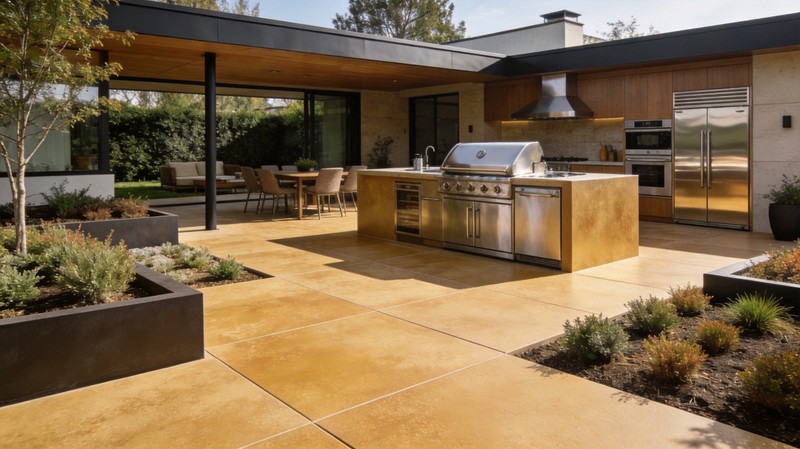
Why Building Exteriors Demand Advanced Materials
Building facades serve as the primary defense against weather, pollution, and environmental stressors while simultaneously defining architectural character. For decades, architects have struggled to balance aesthetic ambitions with practical durability requirements. Sintered stone facade systems now offer a solution that satisfies both demands without compromise.
Traditional building exterior stone options—including natural stone, precast concrete, glass fiber reinforced concrete (GFRC), and aluminum composite panels—each present limitations that sintered stone addresses. As urban environments grow more demanding and clients expect buildings that look immaculate for decades, sintered stone emerges as the logical choice for contemporary architecture.
The Science Behind Sintered Stone Performance
Understanding why sintered stone excels for facade applications requires examining its fundamental composition and manufacturing process.
Sintered stone is produced by subjecting carefully formulated raw materials—including granite minerals, silica, quartz, and natural oxides—to temperatures exceeding 1,200°C under extreme pressure. This sintering process creates a fully vitrified, non-porous material with molecular bonding that cannot be achieved through conventional ceramic firing or concrete curing.
The resulting material demonstrates properties essential for exterior applications:
- Zero water absorption: Below 0.1% porosity prevents moisture infiltration, freeze-thaw damage, and biological growth
- UV stability: Inherent color stability without the degradation that affects resin-based materials
- Chemical inertness: Resistance to acid rain, pollution, and environmental contaminants
- Thermal stability: No expansion, contraction, or cracking from temperature fluctuations
Key Advantages of Sintered Stone Facade Systems
Longevity That Justifies Investment
Building owners and developers increasingly recognize that facade costs extend far beyond initial installation. Maintenance, repairs, cleaning, and eventual replacement create substantial lifetime expenses that traditional materials often underestimate.
Sintered stone facades require no painting, sealing, or surface treatments throughout their operational life. The material's inherent color stability means facades maintain their original appearance for 50+ years, eliminating the cycling between repainting and restoration that characterizes painted or coated surfaces.
For institutional buildings, commercial properties, and residential towers where facade appearance directly impacts property values and brand perception, sintered stone's longevity delivers compelling return on investment.
Weather Resistance for Any Climate
Sintered stone facade systems perform reliably across diverse climatic conditions:
Freeze-thaw resistance: In cold climates, the near-zero porosity eliminates water absorption that causes cracking and spalling in porous materials. Sintered stone maintains structural integrity through thousands of freeze-thaw cycles without damage.
Heat and UV resistance: In hot, sunny climates, sintered stone withstands intense solar radiation without fading, chalking, or surface degradation. The material's thermal mass also helps moderate building temperatures.
Salt and pollution resistance: Coastal environments and urban areas subject facades to salt spray, industrial pollutants, and atmospheric contaminants. Sintered stone's chemical inertness prevents staining and corrosion that affect metal claddings and porous stone materials.
Hurricane and impact resistance: Properly specified and installed sintered stone systems demonstrate excellent performance in high-wind environments, with some installations tested to withstand wind speeds exceeding 250 km/h.
Design Flexibility Without Aesthetic Compromise
Contemporary architecture demands facades that express design visions while delivering performance. Sintered stone provides unprecedented aesthetic flexibility:
Natural stone replication: Advanced printing and texturing technologies create remarkably realistic reproductions of marble, granite, limestone, and travertine. Buildings achieve the prestige of natural stone aesthetics without the maintenance concerns.
Contemporary finishes: Concrete looks, solid colors, metallic effects, and innovative textures expand architectural possibilities beyond natural material limitations.
Large format capability: Panel sizes up to 1600×3600mm enable dramatic installations with minimal joints, creating seamless surfaces that define contemporary architectural aesthetics.
Edge treatment options: Sintered stone's through-body color and pattern enable distinctive edge treatments that add architectural interest to window surrounds, corners, and reveals.
Facade System Types and Installation Methods
Sintered stone facade systems employ various installation methodologies, each suited to specific applications and building types.
Adhesive Bonding Systems
Thin-format sintered stone (3-6mm) can be directly adhered to suitable substrates using high-performance cementitious or epoxy adhesives. This method offers:
- Minimal thickness addition to wall assemblies
- Cost-effective installation for many applications
- Suitable for renovation over existing wall surfaces
- Requires stable, load-bearing substrates
Adhesive systems work well for interior feature walls, ceiling applications, and exterior installations on structurally sound substrates in moderate climates.
Mechanical Fastening Systems
Medium-thickness sintered stone (6-12mm) typically employs mechanical fastening with visible fixings or concealed anchor systems:
- Visible fixings: Exposed screws or bolts create industrial aesthetics suitable for certain architectural styles
- Concealed clips: Hidden anchoring systems provide clean appearances without visible fasteners
- Hook systems: Interlocking hooks enable rapid installation while maintaining concealed connections
Mechanical systems distribute panel loads directly to structural supports, enabling larger panel formats and greater spans between support points.
Ventilated Curtain Wall Systems
The most sophisticated architectural cladding applications employ ventilated facade systems with concealed anchoring:
- Continuous air gap between cladding and insulation
- Thermal buffer effect reducing heating and cooling loads
- Moisture management through natural ventilation
- Structural independence from building movement
- Accessibility for maintenance and panel replacement
Ventilated systems represent the premium facade solution, particularly suitable for large commercial buildings, towers, and projects where energy performance and long-term durability justify higher initial investment.
Specification Considerations for Architects
Successful sintered stone facade projects require careful attention to specification details.
Panel Sizing and Support Spacing
Panel dimensions must relate appropriately to thickness and installation method. Engineering calculations should determine maximum spans between support points based on:
- Expected wind loads for the geographic location
- Building height and exposure category
- Panel thickness and edge conditions
- Allowable deflection limits for appearance
MENGNA SURFACES provides technical support for specification development, including wind load calculations and panel optimization recommendations.
Joint Design and Detailing
Facade joint design affects both appearance and performance:
- Joint width: Typically 6-10mm for standard installations, wider for accommodating thermal movement
- Joint filling: Silicone sealants, EPDM gaskets, or open joints depending on weatherproofing requirements
- Movement accommodation: Flexible joints must accommodate differential movement between panels and structure
Thoughtful joint detailing contributes significantly to facade aesthetics and long-term weatherproofing performance.
Edge Conditions and Reveals
Sintered stone's through-body composition enables distinctive edge treatments:
- Polished, rounded, or chamfered edges
- Integrated reveals creating shadow lines
- Beveled joints for certain architectural styles
- Through-body patterns maintaining design continuity at edges
Comparing Sintered Stone to Alternative Cladding Materials
Understanding sintered stone's position relative to alternative building facade materials helps architects make informed specifications:
Natural stone: Offers comparable aesthetics but requires sealing, can stain, and may deteriorate over time. Sintered stone replicates natural stone while eliminating maintenance concerns.
Aluminum composite panels (ACP): Cost-effective but subject to denting, panel褪色 (fading), and fire concerns. Sintered stone provides superior durability and fire performance.
Glass fiber reinforced concrete (GFRC): Offers design flexibility but can crack and requires protective coatings. Sintered stone's inherent durability exceeds GFRC performance.
HPL panels: Suitable for limited applications but degrade under UV exposure and require replacement cycles. Sintered stone's lifetime durability eliminates replacement considerations.
Sustainable Building and Environmental Considerations
Contemporary architecture increasingly prioritizes environmental responsibility. Sintered stone facades contribute to sustainable building objectives:
- Long lifespan: 50+ year service life reduces replacement material consumption
- Minimal maintenance: Eliminates painting, sealing, and chemical cleaning products
- Recycled content: Many sintered stone products incorporate recycled materials
- Local production: Manufacturing proximity reduces transportation emissions
- Energy performance: Ventilated facade systems improve building energy efficiency
For projects pursuing LEED, BREEAM, or other sustainable building certifications, sintered stone facade systems provide documentation supporting credit achievement.
Conclusion: The Logical Choice for Contemporary Architecture
Sintered stone facade systems represent the evolution of building exterior materials—combining aesthetic versatility, structural performance, weather resistance, and longevity in ways traditional materials cannot match. As architects and developers seek solutions that serve buildings reliably for decades while maintaining design vision, sintered stone emerges as the clear choice for sophisticated exterior architecture.
For more information on sintered stone facade specifications, explore our detailed guide to facade cladding systems or contact our technical team to discuss your project requirements.